AutomaticFillingMachine.com • DRUM & IBC FILLING SYSTEMS
Drum Filling Machine for 200L & 55-Gallon Drums
Controlled filling. Less product loss. Built around your liquid.
A drum filling machine fills 200L and 55-gallon drums to a preset net weight. AutomaticFillingMachine.com supplies automatic and semi-automatic drum filling systems for oils, chemicals, resins and coatings. First, choose a filling method that suits your liquid. Then, select the drum handling equipment your production needs. Systems can handle steel and HDPE drums, with suitable options for 1000L IBC totes.
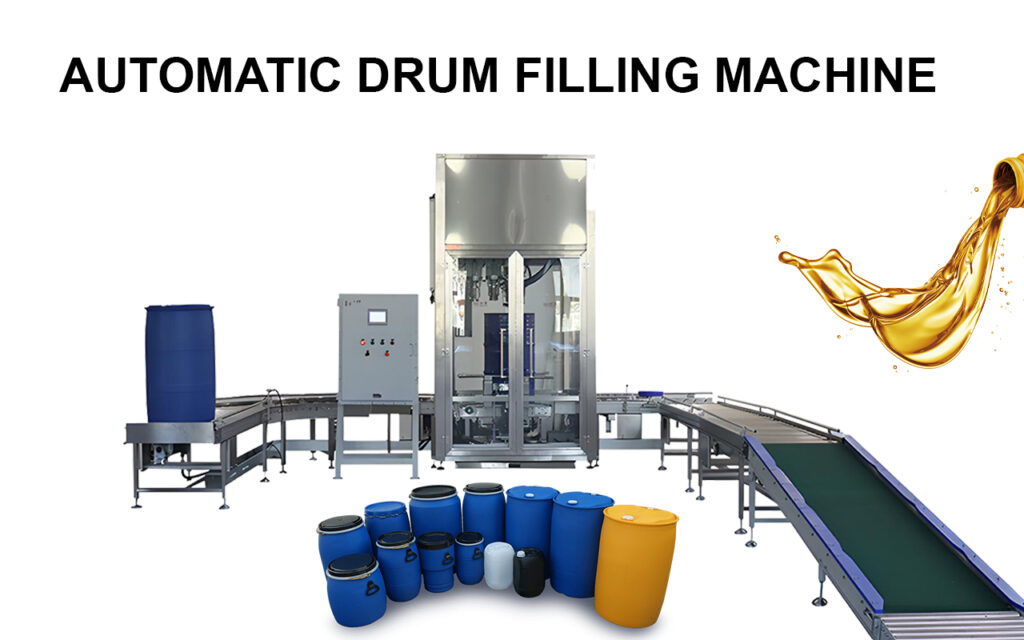
From a single filling station to an integrated drum packaging line.
200–220L
Common drum formats
Net-weight
Load-cell filling control
3 filling modes
Matched to your liquid
Custom layouts
Standalone or integrated
Drum Filling Machine Photos
Compare the machine photos below to explore drum filling station layouts. However, the pictured equipment may differ from your final configuration. For a closer review, request photos, a layout drawing or an operating video of the system proposed for your liquid and drum size.
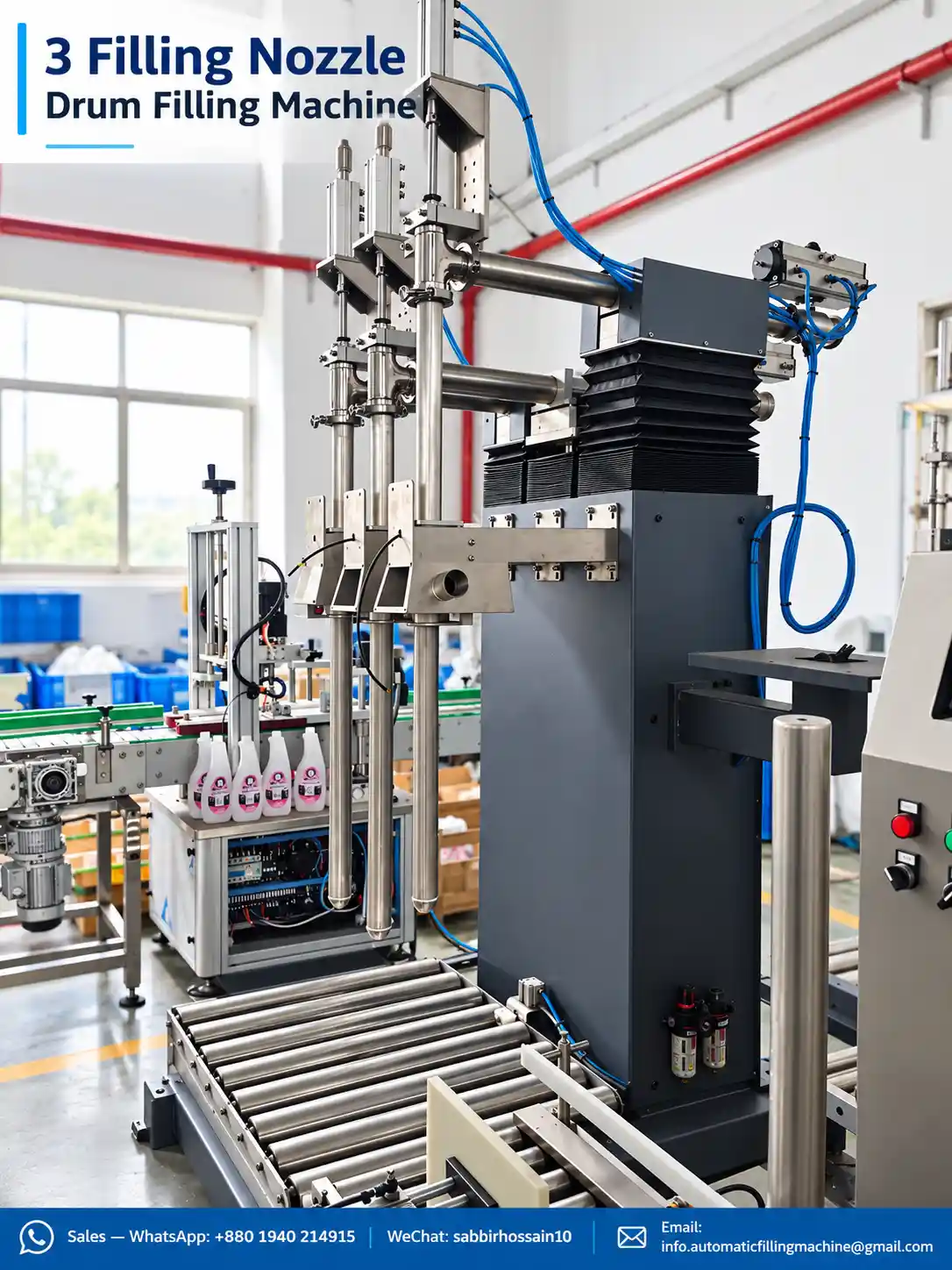
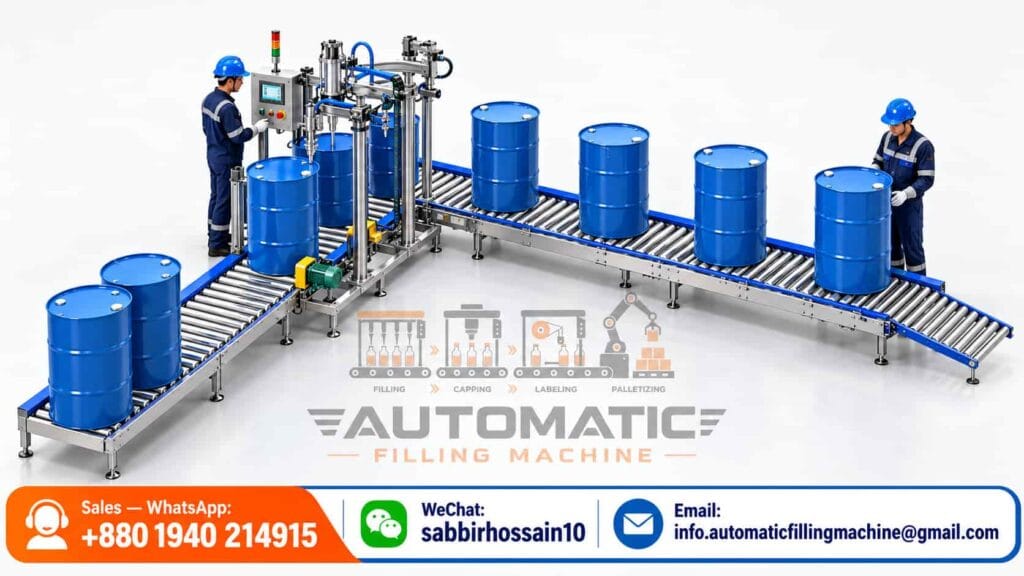
Three-Nozzle Drum Filling System
This three-nozzle layout illustrates a drum filling arrangement for 200L containers. Confirm which operations are automated and how the drums are positioned in the proposed system. Compare the nozzle arrangement and drum access with your production layout. Product compatibility and required filling output should be confirmed for the selected configuration.
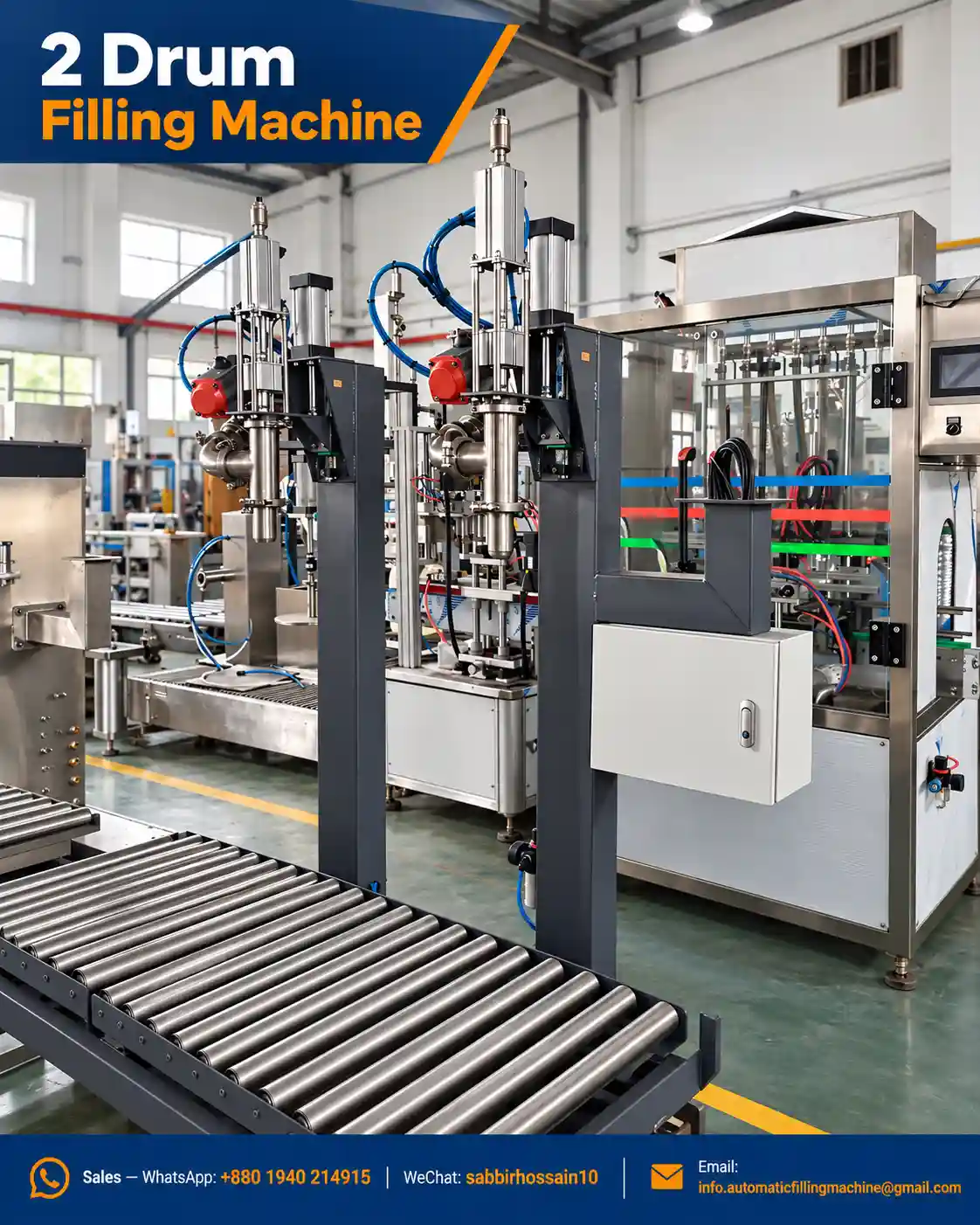
Dual-Nozzle Drum Filling System
This 200L dual-head drum filling system uses load-cell weighing to control the target fill weight for chemicals, lubricants, oils, paints, and industrial liquids. Confirm nozzle spacing, drum access and conveyor height against your container dimensions before choosing a layout.
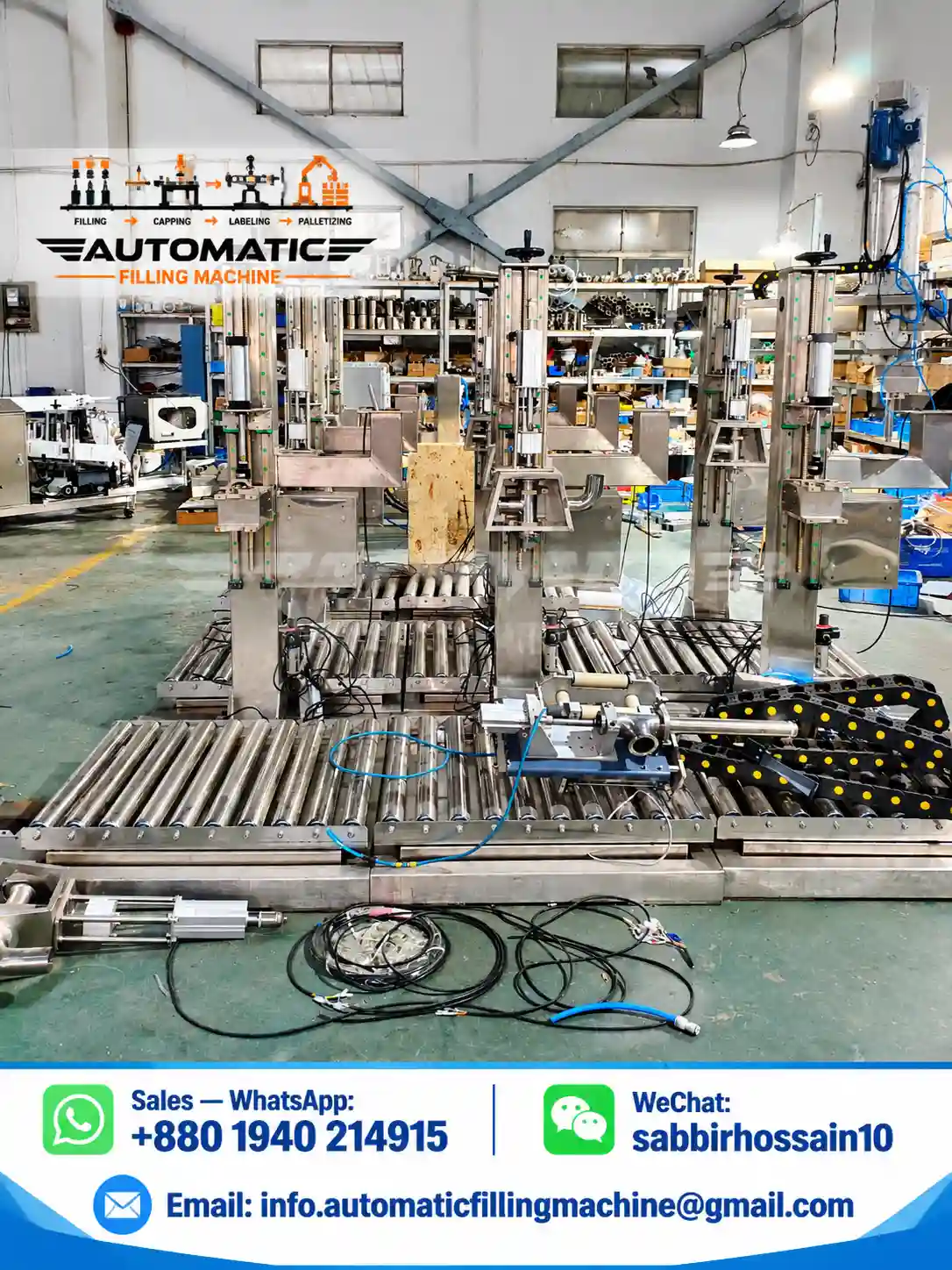
Drum Filling Machine Assembly Workshop
Real factory photo of an automatic drum filling machine production line. The equipment includes stainless steel filling units, multiple filling stations, roller conveyors and industrial automation components. GLZON manufactures customized drum filling systems for chemicals, lubricants, oils, paints and other industrial liquids.
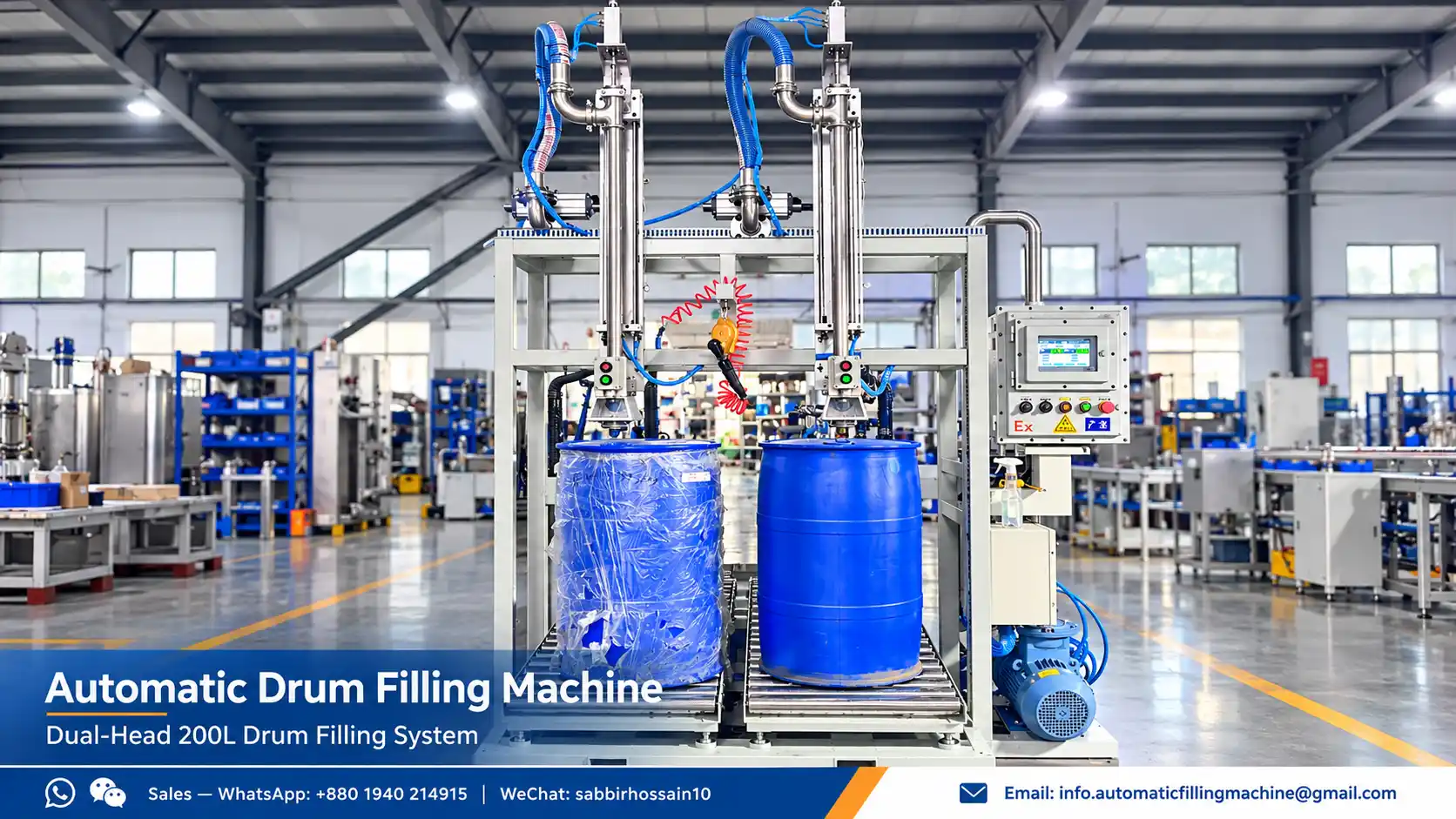
200L Dual-Head Weighing Filler
This dual-head system combines drum positioning and net-weight filling for chemicals, lubricants, oils, paints, and industrial liquids. Check the proposed weighing range, product-feed arrangement and operator access. These details help establish whether the station fits your target fill weight and workflow.
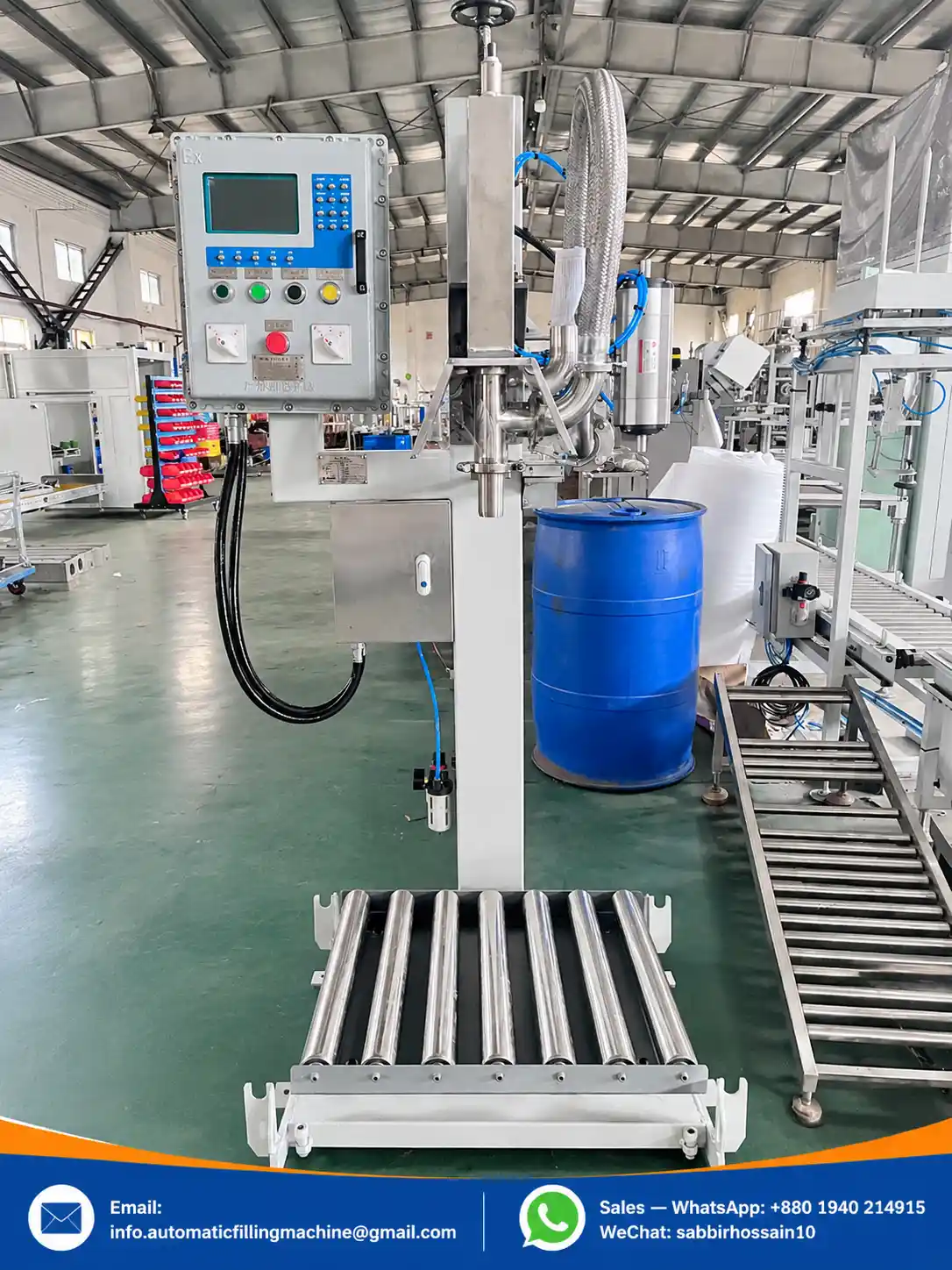
200L Drum Filling Station
Factory photo of a drum filling machine designed for 200L chemical drums, oil barrels and industrial liquids. Review the filling head, weighing platform and conveyor layout shown. Specify any hazardous-area requirements separately so the proposed equipment and documentation can be checked.
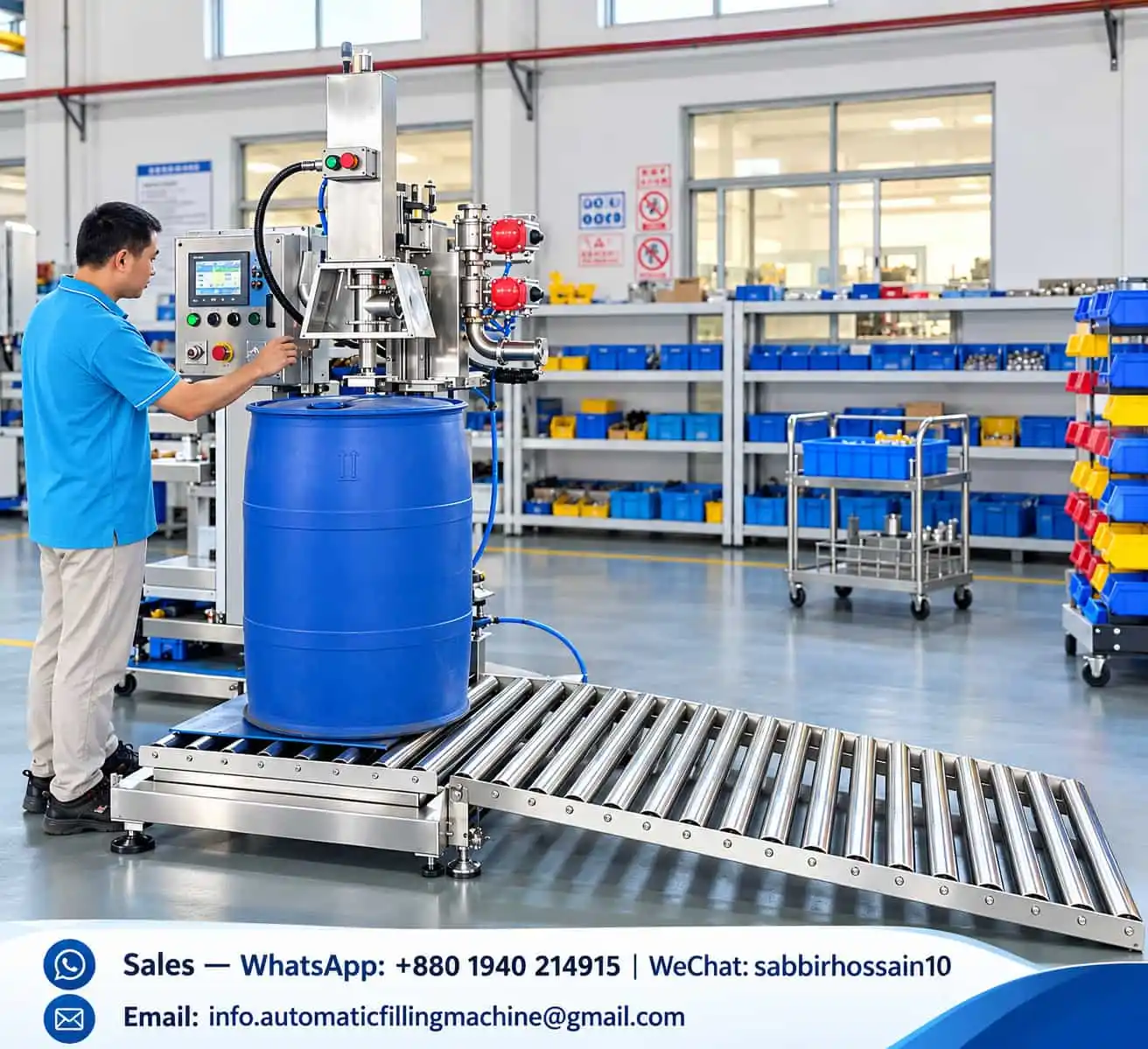
Drum Filling Line with Conveyor
This drum filling layout shows how the filling station connects with container handling. Confirm conveyor direction, available floor space and transfer to capping before agreeing on the final line layout.
Drum Filling Machine Video
CHOOSE YOUR SYSTEM
Automatic or semi-automatic drum filling?
Start with your required drums per hour and available operators. If operators will position each drum, consider a semi-automatic filler. Alternatively, choose an automatic line when you need connected drum transfer and filling. In either case, check the floor space and downstream equipment before selecting the layout.
Quick configuration comparison
- Semi-automatic: the operator positions the drum and starts the cycle. The weighing controller manages filling to the target weight. This suits flexible batches and operator-assisted drum handling.
- Automatic: conveyor-fed handling connects drum transfer and filling. Select this configuration when you need a coordinated production workflow. Capping, labelling and other downstream operations are included only when specified in the agreed scope.
For either configuration, confirm the liquid, target net weight, container dimensions and complete cycle time. Compare quoted accuracy and output under the same product and handling conditions.
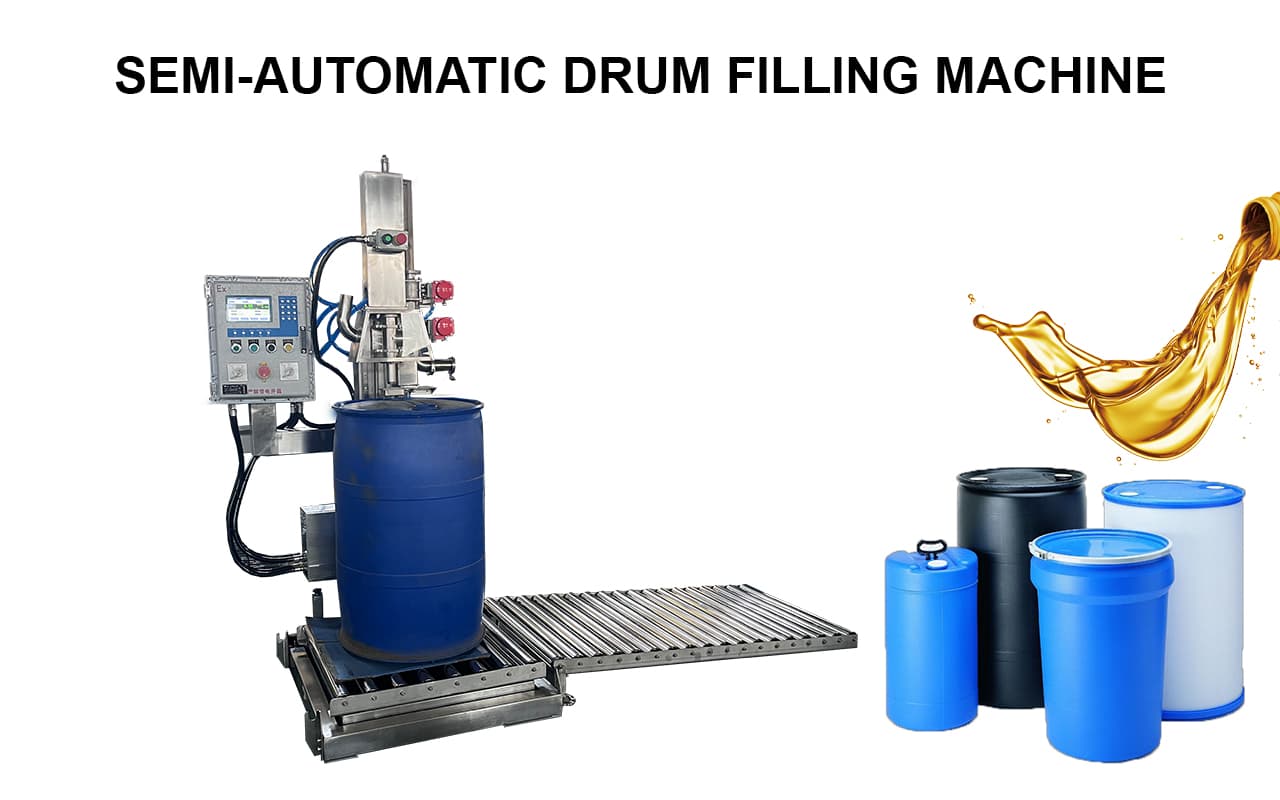
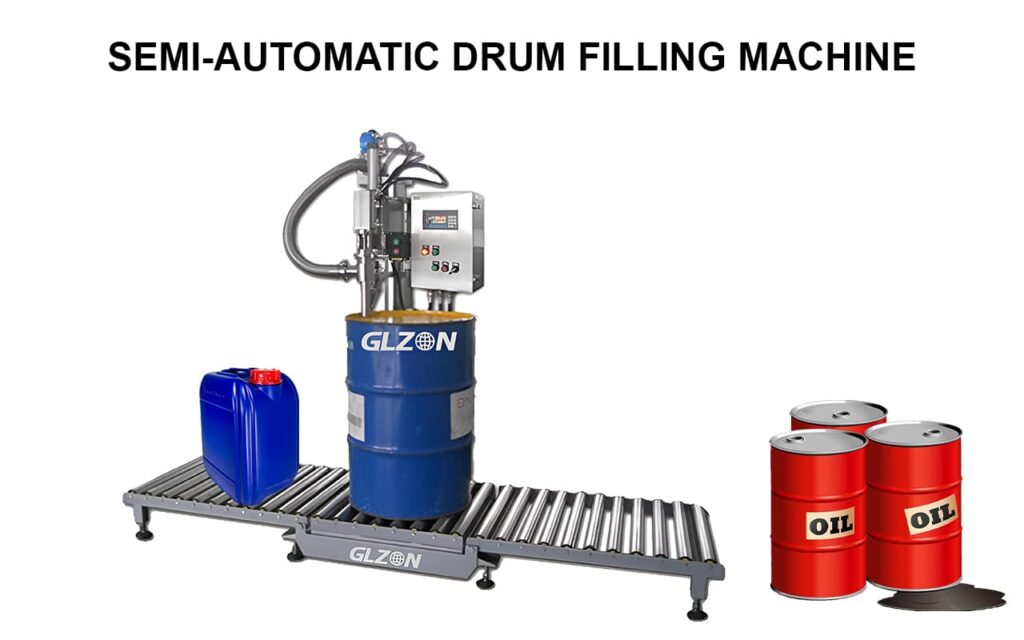
Semi-Automatic Drum Filling Machine
For batch production with operator-assisted handling. The operator positions the drum and starts the cycle; the weighing controller manages filling to the target weight.
- Best fit: flexible batches and existing manual handling.
- Drum movement: manual or assisted transfer.
- Filling control: load-cell feedback with fast and slow filling.
- Planning priority: operator access, changeovers and safe drum movement.
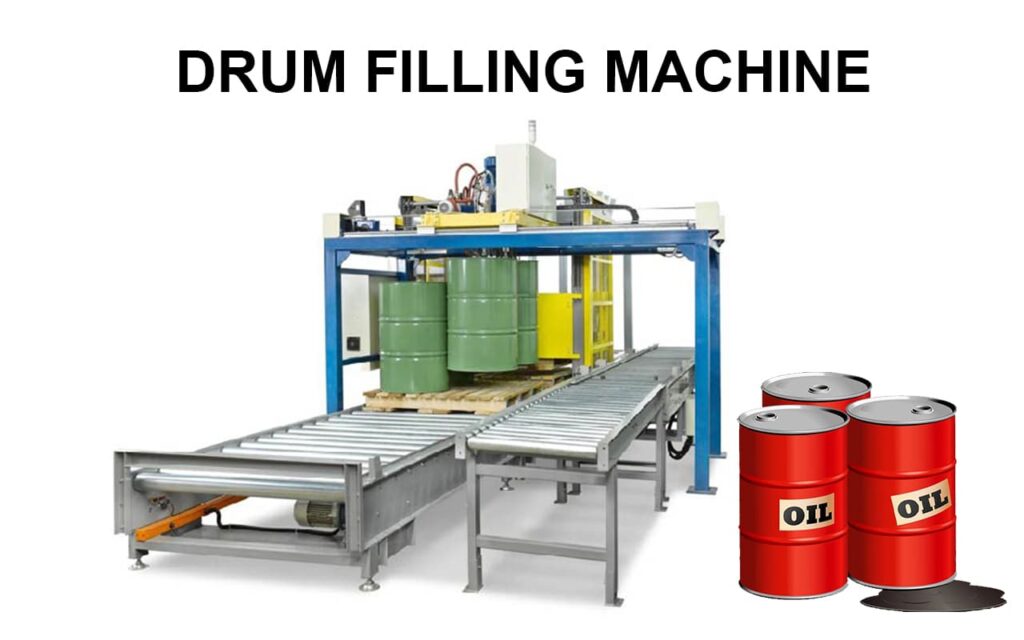
Automatic Drum Filling Machine
For production that needs connected drum handling. The selected line coordinates drum transfer, weighing filling and downstream operations.
- Best fit: repeat production with an integrated workflow.
- Drum movement: conveyor-fed handling and positioning.
- Available options: bung opening, capping, labelling and palletising.
- Planning priority: complete cycle time, line layout and downstream capacity.
FILLING TECHNOLOGY
How the drum filling process works
A drum filling machine dispenses liquid into a container to a preset target weight. AutomaticFillingMachine.com weighing systems combine load-cell feedback with a pneumatically operated filling valve to control product delivery.
- Position and tare: Place the empty drum on the weighing platform, align its opening with the nozzle and tare the scale so the container weight is excluded.
- Fast filling: The valve opens for the main filling stage. The load cells continuously measure the liquid added to the drum.
- Slow filling: As the measured weight approaches the target, the controller reduces flow to improve control over the final amount.
- Final cut-off: The valve closes at the configured cut-off point, allowing for liquid still travelling from the nozzle. The settings are adjusted during commissioning for the actual product and feed conditions.
- Finish and transfer: After the weight stabilises, the nozzle withdraws where fitted. The drum moves to capping or the next handling stage, manually or automatically according to the line configuration.
An anti-drip nozzle helps limit residual drips. Stable feed pressure and a correctly selected pump help the fast and slow filling stages work consistently.
01 / Surface filling
Dispenses from above the product surface. Suitable for compatible liquids where foaming and splashing are limited.
02 / Sub-surface filling
Keeps the nozzle below the liquid surface during filling to help reduce splashing and foam.
03 / Bottom-up filling
A rising lance starts near the bottom and lifts as the drum fills. Useful for products that need more careful foam control.
PRODUCT COMPATIBILITY
Drum filling applications: oils, chemicals & coatings
Oils & lubricants
Engine oil, hydraulic oil and lubricants. Pump and nozzle selection depend on viscosity and operating temperature.
Resins, paints & adhesives
Configure the feed system and filling valve for product flow, solids content and cleaning requirements.
Detergents & cleaning liquids
Choose suitable wetted materials and a filling method that helps manage foam and dripping.
Edible oils
Sunflower, olive and other cooking oils. Specify product-contact materials and cleaning requirements for your application.
For solvents or corrosive chemicals, share the product safety data sheet. Explore our chemical drum filling systems or read the drum filling machine selection guide. Wetted materials, seals and explosion-protection requirements must be checked for the specific application.
CONFIGURATION GUIDE
Drum filling machine specifications & options
First, compare the container formats, filling methods and materials below. Next, send your liquid and required output so we can select a suitable model. Your quotation will list the included equipment, agreed performance, utilities and machine dimensions.
What affects drum filling machine price? Cost depends on the automation level, number of filling heads, pump, product-contact materials and drum handling. In addition, explosion-protection requirements and downstream capping or labelling change the scope. Compare quotations for the same equipment and agreed performance, rather than the filling station alone.
Container formats
200L, 205L, 208L and 220L steel or HDPE drums; actual dimensions and bung positions determine compatibility.
IBC configuration
1000L tote filling can be included with a suitable weighing platform, lance reach and handling arrangement.
Dosing & valve control
First, the load cells measure the empty drum weight. Next, the system fills quickly before reducing flow near the target. Finally, the valve closes at the set cut-off point. This net-weight process measures the liquid added rather than the total weight of the drum.
Filling method
Surface, sub-surface or bottom-up filling, selected for the product and container.
Product-contact materials
SS304, SS316 or compatible alternative components; seals and PTFE parts selected for the liquid, concentration and temperature.
Operator controls
PLC and HMI operation; language and electrical supply agreed in the machine quotation.
Accuracy & throughput
Filling accuracy depends on the liquid, target weight, valve response and stable product supply. For example, a change in feed pressure can affect the final cut-off. Therefore, request a performance test for your actual product. When comparing output, include drum positioning, filling, capping and transfer in the complete cycle time.
Utilities & footprint
Power, compressed-air demand, pump requirements and machine dimensions are confirmed with the final configuration and layout.
Line integration
Conveyors, bung opening, capping, labelling and palletising are available according to the agreed scope.
Hazardous-area requirements
Explosion-protection equipment and documentation are assessed for the product and installation requirements.
WORKING WITH AutomaticFillingMachine.com
A filling solution starts with your production details.
01 / Share your process
First, send the liquid name, density, viscosity and filling temperature. Also include drum photos, dimensions, target filling weight and required drums per hour. Finally, share your available floor space and utility supply so we can prepare a practical layout.
02 / Review the configuration
Review filling method, materials, handling equipment, utilities and any special product requirements.
03 / Confirm the scope
Agree on the machine layout, performance targets, testing requirements and support included in your quotation.
Before shipment: agree on an acceptance test. Record the test liquid, temperature, drum size and target net weight. Then check repeated fills against the agreed accuracy and measure the complete cycle, including drum positioning and transfer. Also review nozzle dripping, recipe settings, cleaning access and any capping operation included in the order.
Ask for a test report showing the conditions, measured results and configuration tested. This makes it easier to compare the delivered system with the performance stated in your quotation.
COMMON QUESTIONS
Drum filling machine FAQs
Can one system fill drums and IBCs?
Yes, a suitable configuration can handle drums and 1000L IBCs. Share the container dimensions, opening positions and handling method so the filling reach and weighing platform can be checked.
What determines filling speed and accuracy?
Product viscosity, feed pressure, pump capacity, nozzle size, fill weight and drum handling all affect performance. Request specifications for your actual product and selected configuration. Compare complete cycle time, including drum positioning and transfer, rather than filling time alone.
Does a weighing filler measure litres or kilograms?
A load-cell system measures mass, normally in kilograms. If your packaging target is stated in litres, establish the corresponding target weight using the product density at the filling temperature. A 200L drum does not mean every liquid should be filled to 200kg.
What helps maintain filling accuracy?
Keep the weighing platform free from unintended contact with surrounding equipment, maintain stable product supply and check calibration using suitable test weights. Changes in viscosity, temperature or feed pressure may require adjustment of the fast-fill, slow-fill and cut-off settings.
How should the machine be cleaned between products?
Choose a cleaning procedure that suits the liquid, seals and wetted materials. Plan safe draining and access to the nozzle, valve, hoses and pump. When changing between incompatible products, assess dedicated product-contact components or a validated cleaning process. Cleaning requirements should be agreed before the machine is configured.
Can capping and palletising be added?
Depending on the drum and line layout, the filling station can be combined with conveyors, bung opening, capping, labelling and palletising. Specify which operations you want automated so the complete line can be sized around your required output.
Can the machine fill foaming liquids?
Sub-surface or bottom-up filling may help manage foam. The appropriate lance movement and filling speed depend on the liquid and container.
Is explosion protection standard?
Explosion protection is configuration-specific. Provide the liquid safety data sheet and site requirements so the required equipment and documentation can be assessed.
What should I send for a quotation?
Send the following details so AutomaticFillingMachine.com can prepare a useful machine proposal:
- Liquid name and safety data sheet where applicable.
- Density, viscosity and operating temperature, plus any tendency to foam or contain solids.
- Drum capacity, dimensions, opening size and photographs.
- Target net weight per drum and required drums per hour.
- Available power supply, compressed air and product-feed arrangement.
- Factory layout and requirements for capping, conveyors, labelling or palletising.
Include your delivery destination and any required inspection or documentation. These details help establish the machine scope, layout and quotation.
Explore detailed drum filling guides
Compare the technical choices behind your filling system before requesting a configuration. If you are comparing container formats, read our drum vs IBC tote filling guide. For operator-assisted production, review the semi-automatic drum and IBC operation guide.
For more detail, compare the automatic drum filler setup, our equipment selection checklist, the explosion-proof drum filling system guide, and the engine-oil drum filling example. Choose materials and protection for your specific liquid and installation.
Choose the right nozzle
Compare short and long nozzles, surface filling and bottom-up filling for your liquid.
Understand weighing control
Explore the role of load cells, product supply and filling controls in consistent dosing.
Specify a chemical system
Review product compatibility, nozzle selection and application-specific equipment options.
Tell us what you need to fill.
Send your liquid, drum size and target output. Our team will help you select a practical drum filling machine and prepare a tailored quotation.
Contact Sabbir Hossain on WeChat: sabbirhossain10
Search this WeChat ID to discuss your machine requirements and share product or container photos.
Tell us your required filling capacity to get started.