Equipment Photo Gallery
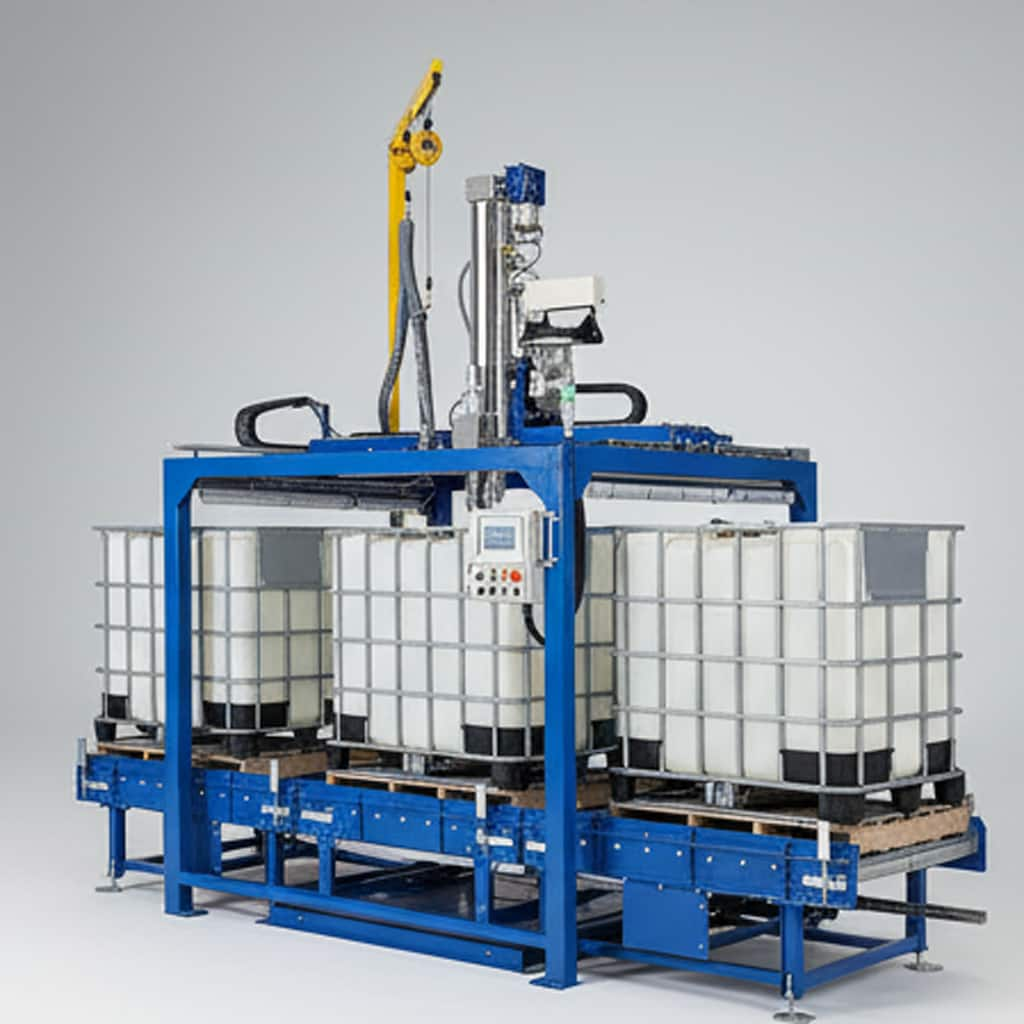
IBC Filling Machines for Industrial Liquids
An IBC filling machine dispenses liquid into intermediate bulk containers while measuring the amount delivered. AutomaticFillingMachine.com configures tote filling stations for oils, chemicals, coatings and other industrial liquids. The right setup depends on the product, the IBC, the required output and the installation environment.
Choose the Automation Level
Semi-automatic IBC filling: An operator positions the tote and starts the cycle. The system controls the fill and stops at the set target. This arrangement suits varied products, smaller batches and plants where an operator already handles each container. See the semi-automatic IBC filling machine for the operating sequence and selection factors.
Automatic IBC filling: The line can add conveyor movement, tote positioning and coordinated controls to reduce manual handling. The exact functions vary by project. See the automatic IBC filling machine for line integration options.
Compare Automatic and Semi-Automatic IBC Configurations
Use this comparison to define the handling operations you need. It compares configuration types; the final model, equipment scope and performance must be confirmed in your quotation.
| Selection factor | Semi-automatic station | Automatic line |
|---|---|---|
| Container positioning | An operator presents and positions the tote at the station. | Conveyor movement and tote positioning can be coordinated where specified. |
| Filling control | The operator starts the cycle; weighing control manages filling to the target. | Filling and container handling are coordinated within the agreed line sequence. |
| Production planning | Include operator availability, tote changeover and manual handling in the cycle time. | Include upstream supply, conveyor transfer and downstream capacity in the cycle time. |
| Capping and labelling | Specify whether these tasks remain separate or require additional equipment. | Confirm each included operation; automation does not imply that every downstream task is included. |
| Layout review | Check platform access, safe tote movement and the product-feed connection. | Check conveyor direction, transfer points, maintenance access and the complete line footprint. |
| Quoted performance | Confirm accuracy and complete output for the actual product, tote and feed conditions. | Confirm accuracy and complete output for the actual product, tote and agreed automated sequence. |
Container and site data to confirm
First, provide the IBC capacity, overall dimensions, base design and opening position. Next, identify the product-contact material and cleaning requirements. Also share the supply tank or pump arrangement, available power and compressed air, and any classified-area requirements. These details determine the platform, filling-head reach and installation scope.
Request a layout drawing and operating video of the proposed configuration before agreeing on the equipment scope. The drawing should identify tote access, nozzle reach and connections. The video should show the handling and filling operations included in the proposal.
How Net-Weight Tote Filling Works
- The empty IBC is placed on the weighing platform and its tare weight is recorded.
- The nozzle is aligned with the container opening and the filling cycle begins.
- The controller monitors the delivered weight. A fast stage supplies most of the product; a slower final stage approaches the target.
- The valve closes, the final weight is checked, and the filled tote leaves the station.
The achievable accuracy and hourly output depend on product flow, valve response, stable weighing, container handling and the agreed test conditions. Confirm those figures for the exact configuration in the quotation and factory acceptance test.
Match the Machine to the Liquid
Viscosity, foam, temperature, corrosion risk and flammability affect the filling method and wetted parts. A rising or subsurface nozzle can help control splashing and foam for certain liquids. Contact materials and seals should be selected for the product being filled. If the installation is in a classified hazardous area, specify the zone and applicable standards before the electrical and grounding design is finalized.
For lubricants, the engine-oil and lubricant IBC guide covers viscosity, cleanliness and RFQ details. For combined container projects, see the drum and IBC filling system guide. Plants filling both drums and totes can also compare the drum filling machine range and decide whether one shared station or separate equipment makes operational sense.
Options for a Complete IBC Filling Line
- Fixed or swing-arm filling head, selected around opening position and operator access.
- Top, subsurface or bottom-up filling according to product behavior.
- SS304 or SS316L contact parts and compatible seal materials where specified.
- PLC and HMI recipe controls for repeatable target settings.
- Conveyors, container positioning, capping and labeling where the line scope requires them.
- Grounding and suitable explosion-protection options for classified areas, subject to engineering review.
1000L IBC Filling Machine: Common Questions
Does a 1000L IBC require a 1000kg fill?
No. A weighing system measures mass, while litres describe volume. Establish the target net weight from the actual liquid density at the filling temperature. Also confirm usable capacity and required headspace. The container capacity alone does not determine the correct fill weight.
Can one station handle different IBC containers?
A suitable configuration may accommodate several tote designs, but nominal capacity is not enough to confirm compatibility. First, provide the overall dimensions, base design, opening size and opening position. Then check platform capacity, nozzle reach and handling clearance for each container.
What affects IBC filling machine price?
Price depends on the filling head, product-feed system, wetted materials, weighing equipment and automation scope. In addition, conveyors, capping, cleaning requirements and hazardous-area protection can change the proposal. Compare quotations that include the same operations and agreed performance conditions.
How should output be checked before purchase?
Agree on a test that includes tote positioning, filling, nozzle withdrawal and container transfer. Record the product, temperature, target net weight and supply conditions. Finally, compare repeated fill results and complete cycle time with the performance agreed in the quotation.
If your plant fills both container types, read our drum versus IBC tote filling guide before deciding between a shared station and separate lines.
Information Needed for a Proposal
Send the liquid name and properties, IBC size and opening, target fill weight, required totes per hour, supply conditions and any safety or cleaning requirements. Our team can then define a filling method, automation level and test plan. Request an IBC filling machine quote with your application details.