Equipment Photo Gallery
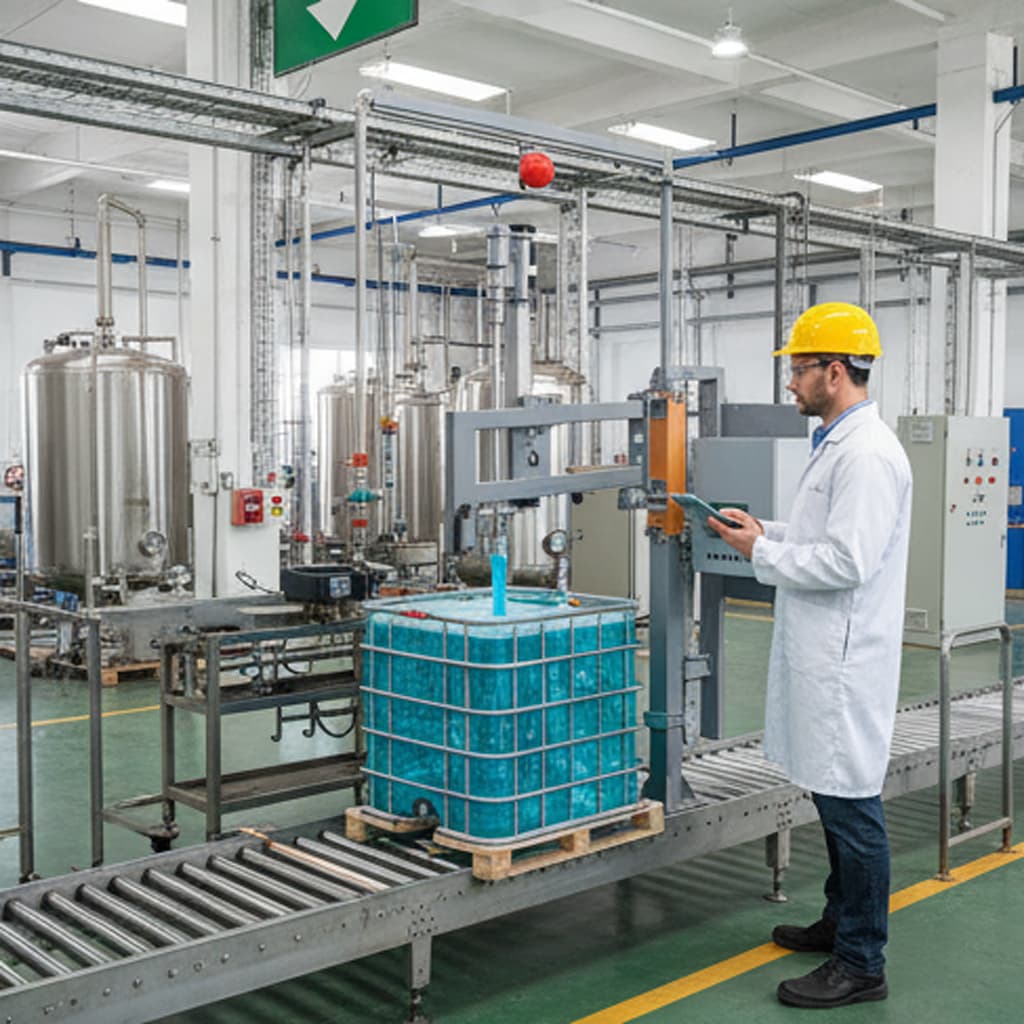
IBC Filling Machine for Engine Oil and Lubricants
Filling engine oil into an IBC tote calls for control of fill weight, product flow and cleanliness. Lubricants can vary in viscosity with temperature, so a system chosen for a thin hydraulic oil may need different pumping and nozzle settings from one used for heavier gear oil. This guide explains the choices to define before ordering an IBC filling machine for oil.
Start With the Oil and Container
Confirm the oil grade, viscosity at the filling temperature, target fill weight, IBC dimensions and required containers per hour. Also tell the engineering team whether the same station must fill smaller drums or several oil grades. These details determine the feed method, wetted materials, nozzle position and changeover procedure.
For 1,000 L IBC totes, net-weight filling uses a platform scale or load cells to measure the product delivered into each container. The controller can use a fast stage followed by a slower final stage to approach the target weight. The accuracy and output of a specific machine should be confirmed in its quotation and factory test plan, using your oil and container where practical.
Choose a Filling Mode for Lubricants
- Top filling: A simple option when splashing and foam are controlled for the oil being filled.
- Subsurface or bottom-up filling: The nozzle enters the container and the fill level rises around it. This can help reduce splashing and foam, depending on product behavior and the selected nozzle.
- Manual or automatic IBC handling: A semi-automatic station suits operator-loaded totes and varied batches. An automatic line can add conveying, container positioning and downstream handling when higher output is required.
Oil viscosity, temperature and desired flow rate should guide pump and line sizing. For a product that thickens in a cold plant, ask the manufacturer how the system maintains repeatable fill times across the operating temperature range.
Protect Product Quality During Filling
Check the material and seal compatibility for each lubricant. Specify a cleanable product path, a suitable hose or pipe arrangement and a nozzle that closes without excessive dripping. If the oil must be protected from dust or cross-contamination, include container preparation and line cleaning in the project scope. Dedicated product paths may be useful when different grades cannot mix.
Some oils or additives may require special handling. Confirm whether nitrogen blanketing, filtration, heated lines or batch traceability is genuinely needed for your process before including it in a quotation. These are project-specific options, not assumptions for every IBC filler.
What to Include in an Engine-Oil IBC Filling RFQ
- Oil type, viscosity and filling temperature range.
- IBC capacity, opening dimensions and target net weight.
- Required IBCs per hour and number of shifts.
- Whether drums and IBCs share the same filling station.
- Preferred top or subsurface filling method and any foam concerns.
- Required materials, seals, cleaning method and data records.
- Electrical supply, compressed air and any hazardous-area classification.
Those inputs let the supplier propose a configuration and test criteria that can be checked before shipment. For the broader range of tote equipment, see our IBC filling machine overview. For operator-loaded equipment, compare the semi-automatic IBC filling machine. If your line needs automatic container movement, see the automatic IBC option.
Discuss Your Oil Filling Project
Send your oil properties, IBC drawing and production target through the request a quote form. AutomaticFillingMachine.com can review the filling method, contact materials and automation scope for your application.