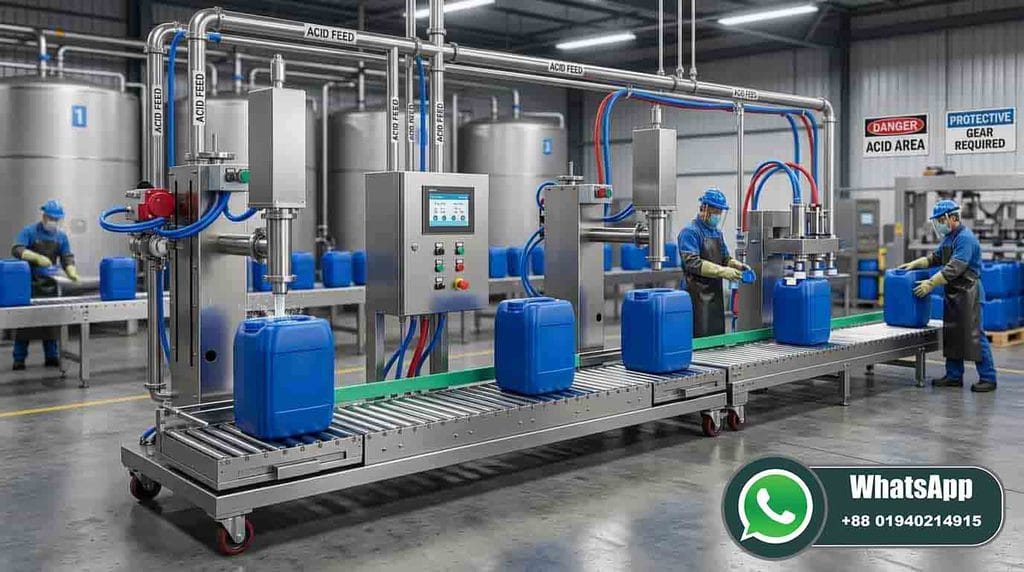
Equipment Photo Gallery

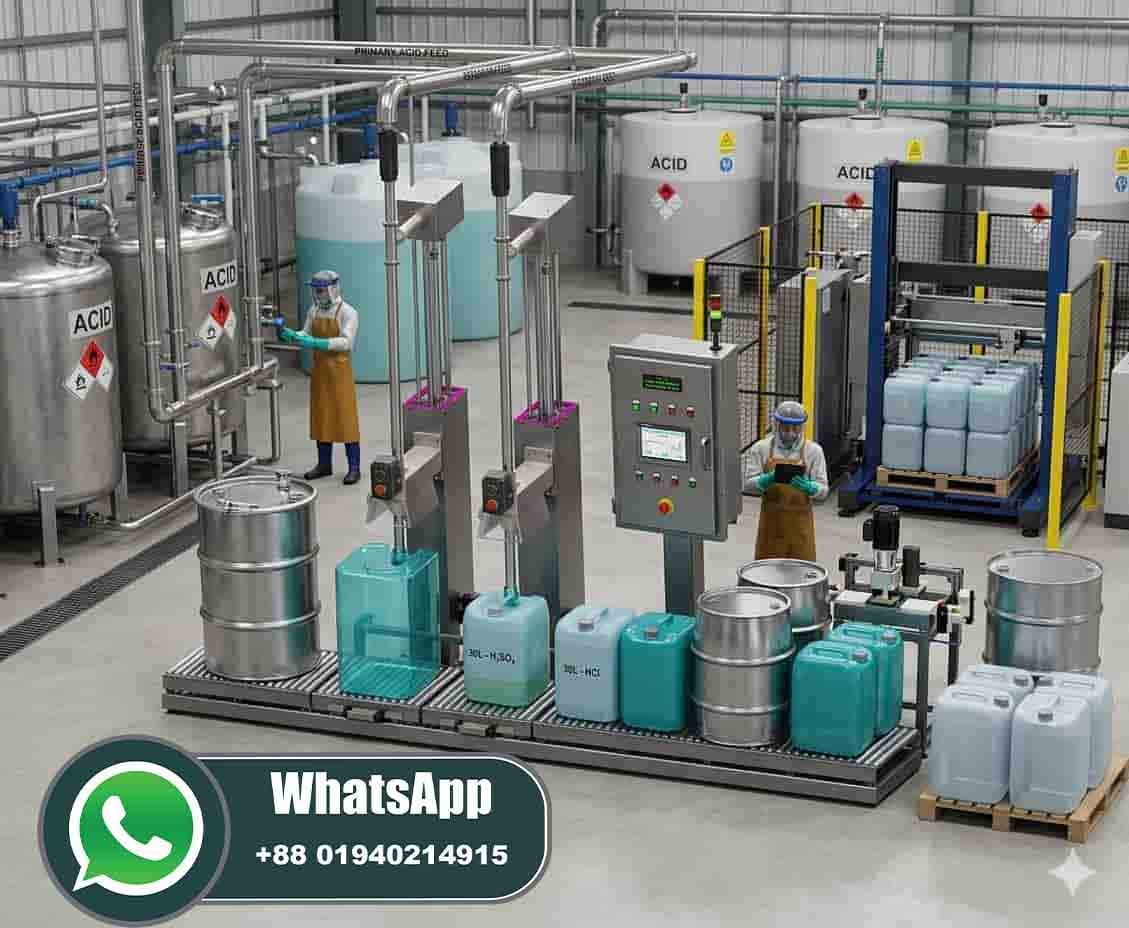
An acid filling machine must be selected for the actual corrosive liquid, its concentration, filling temperature and container. The same material or seal is not suitable for every acid. Start with product data, then review the complete product-contact path and the proposed filling arrangement with the supplier.
This page focuses on acid compatibility and jerrycan or pail selection. For 200L drum layouts and handling, use the dedicated chemical drum filling guide. The proposed configuration should be confirmed for your application before ordering.
Confirm the Product Before Selecting Materials
Provide the chemical name, composition, concentration, safety data sheet, filling temperature, density, viscosity and any suspended solids. Also describe foaming, crystallization or contamination concerns. These details affect the pump, hoses, valves, seals and nozzle.
Ask the supplier to identify the wetted materials throughout the proposed system and confirm their compatibility under the stated conditions. A general description such as stainless steel or corrosion-resistant does not establish suitability for a specific liquid.
Choose the Container and Filling Arrangement
For jerrycans and pails, provide container photos, dimensions, opening position, neck diameter, closure type and minimum and maximum planned fill quantities. Check that the container can be supported and positioned consistently at the nozzle. Confirm conveyor or platform suitability for the actual container rather than assuming a drum arrangement will handle smaller packages.
Discuss automatic or semi-automatic operation around the tasks the operator will perform. Container placement, tare, nozzle positioning, filling, closure and removal all affect the complete cycle. Ask the supplier to state which tasks are included in the quoted equipment.
For larger drums, compare the drum filling machine configurations. For viscous resins, use the separate resin filling and capping guide rather than applying an acid configuration to another product without review.
Review the Complete Product-Contact Path
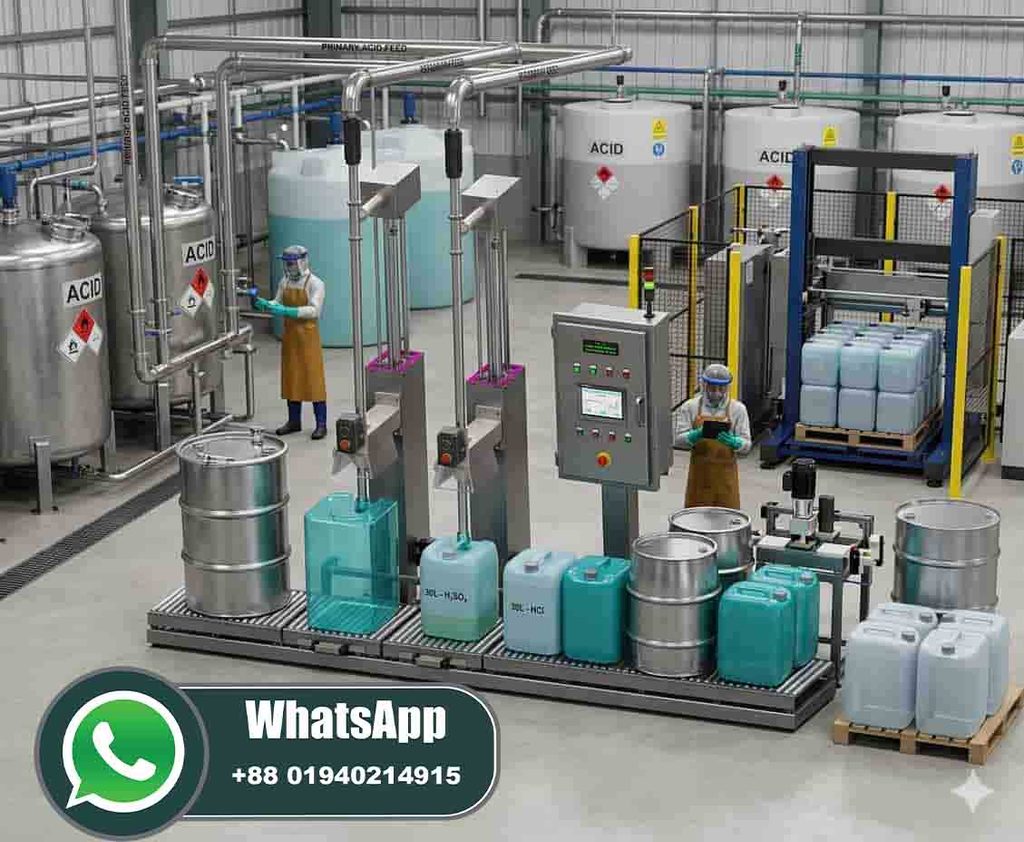
Compatibility review should cover every wetted component, including the product supply, pump, pipework, hoses, valve, nozzle and seals. Confirm cleaning liquids and cleaning temperature as well as the product itself. Request the proposed material and seal list with the quotation.
The filling mode must also suit the product and container. Where foam or splashing affects operation, discuss the nozzle movement and fill profile with the supplier. Confirm how residual liquid and drips are controlled during withdrawal, and verify the arrangement in a product-based trial.
Corrosion resistance and explosion protection address different hazards. Do not assume that a liquid requires the same hazardous-area configuration simply because it is corrosive. Supply the product data and site requirements so qualified personnel can assess the installation and required equipment documentation.
Confirm Performance Through an Agreed Test
Define the target quantity and allowable deviation before comparing filling systems. For net-weight filling, agree on tare handling, verification equipment and the conditions for repeated fills. Output should be measured over the complete container-handling cycle, not inferred from pump flow alone.
Ask for test results for the actual product or an agreed representative liquid. Record temperature, supply conditions, container format and filling recipe. Treat accuracy and production-speed figures as configuration-specific requirements to verify, rather than universal ratings for all acids and containers.
Acid Filling Machine Questions
Can One Acid Filling Machine Handle Every Acid?
Compatibility must be checked for each product and its operating conditions. Changes in concentration, temperature, seals or cleaning procedure may require a different configuration. Provide the actual product information before reusing equipment for another acid.
Can Corrosive Liquids Be Filled by Net Weight?
A weighing arrangement can control the quantity added to a container, provided the product-contact components and installation are suitable for the application. Confirm tare handling, container support and the acceptance-test procedure with the supplier.
Should I Choose Automatic or Semi-Automatic Filling?
Compare required output, container handling and operator tasks. Semi-automatic equipment can leave placement or closure to an operator; an automatic line may include additional handling stages. Confirm the exact scope instead of selecting by the automation label alone.
What Documentation Should I Request?
Request the model configuration, product-contact material list, operating and cleaning instructions, proposed test criteria and any documentation required for the installation. Certification claims should identify the equipment and configuration they cover.
Prepare an Application Brief for the Supplier
Include the product composition and concentration, safety data sheet, filling and cleaning temperatures, viscosity and density. Add container drawings or photos, target quantity, required complete containers per hour and the planned product-supply arrangement.
Then list the factory utilities, installation constraints, closure requirements, operator tasks and documentation needs. Compare quotations using the same application brief so differences in wetted parts, handling equipment and test scope remain visible.
Request an Acid Filling Configuration Review
Send your product and container information to request an acid filling configuration review. The proposal should identify the selected equipment, included components, compatibility assumptions and agreed performance test. For drum-specific product handling, continue to the chemical drum filling guide.