Equipment Photo Gallery
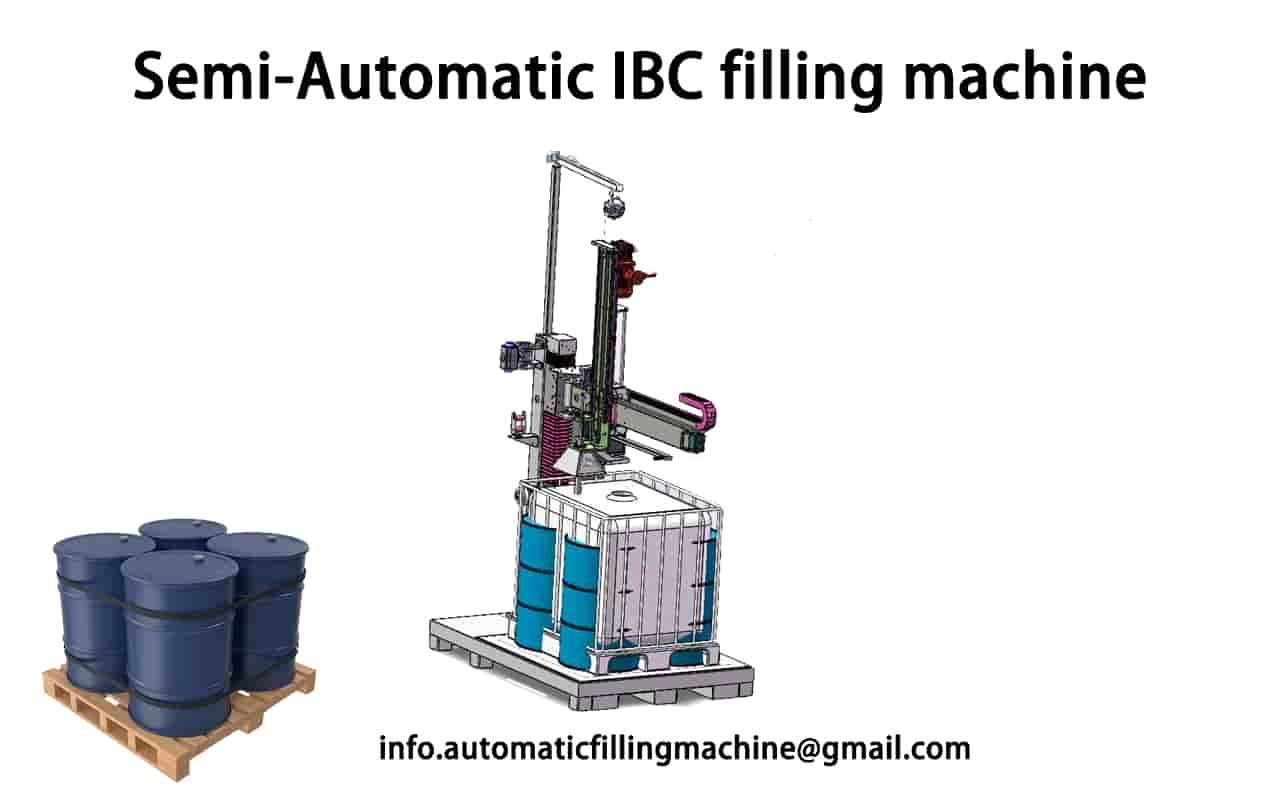
Semi-Automatic Drum and IBC Filling: Operator Workflow
A semi-automatic filling station combines operator-assisted container handling with controlled filling to a selected target weight. The operator positions the drum or tote and starts the cycle. The included weighing and valve controls manage filling according to the agreed configuration.
This guide explains the operator tasks to define before ordering. For container handling differences, use the drum-versus-IBC comparison guide. For drum equipment options, compare the automatic and semi-automatic drum filling range.
Prepare the Container and Recipe
- Confirm that the container, closure and product-contact components are approved for the intended formulation.
- Check container dimensions and platform capacity against the proposed machine layout.
- Position the container as described in the operating instructions and confirm nozzle access.
- Select the correct product recipe and target net weight. Check tare handling before starting.
- Confirm the agreed product supply and required utilities.
The operating manual for the delivered machine should define the actual checks, controls and permitted operator actions. This planning guide does not replace those instructions.
Nozzle Selection and Filling Sequence
Choose nozzle length and filling position around the container opening, liquid behaviour and available clearance. A longer nozzle may support sub-surface filling where that mode suits the product and container. Test foaming, dripping and withdrawal with the intended liquid; a nozzle choice alone does not establish output or hazardous-area suitability.
Typical Operator-Assisted Cycle
- Position the drum or tote and confirm its stability and access.
- Select the recipe, check the target and confirm the tare procedure.
- Place or align the nozzle using the supplied controls and instructions.
- Start filling. The controller follows the agreed fast and slow flow stages and target cut-off.
- After the cycle is complete, withdraw the nozzle as instructed and check the fill result.
- Handle capping and transfer according to the agreed scope. These operations may remain manual.
Ask the supplier to demonstrate start, stop and fault-recovery behaviour for the delivered controls. Confirm which actions require an operator and which functions are automated. Do not describe the station as hands-free if positioning or closures remain manual.
Changeover, Cleaning and Verification
Before changing products or container formats, follow the supplied procedure for stopping, draining and cleaning the system. Confirm access to hoses, valves, seals and the nozzle. Then select the next approved recipe and verify the setup before production resumes.
For acceptance testing, record the product, temperature, target net weight and container format. Check repeated fills against the agreed tolerance using an independent verified scale. Measure the full cycle with operator positioning and transfer included.
Confirm the Quotation Scope
| Item | Question to resolve |
|---|---|
| Operator tasks | Who positions containers, starts cycles, handles closures and transfers filled containers? |
| Product feed | Is a pump included, or is supply provided by the customer? |
| Formats | Which drum and IBC dimensions, tare weights and target fills are supported? |
| Cleaning | Which components need draining, cleaning or disassembly between products? |
| Documentation | Which manuals, test records and equipment documents are included? |
| Options | Are conveyors, closures, product collection or other functions included or separately quoted? |
For a classified installation, use the hazardous-area requirements checklist and confirm the exact equipment documentation. Send the liquid details, container drawings and required operator workflow to request a quotation.