Equipment Photo Gallery
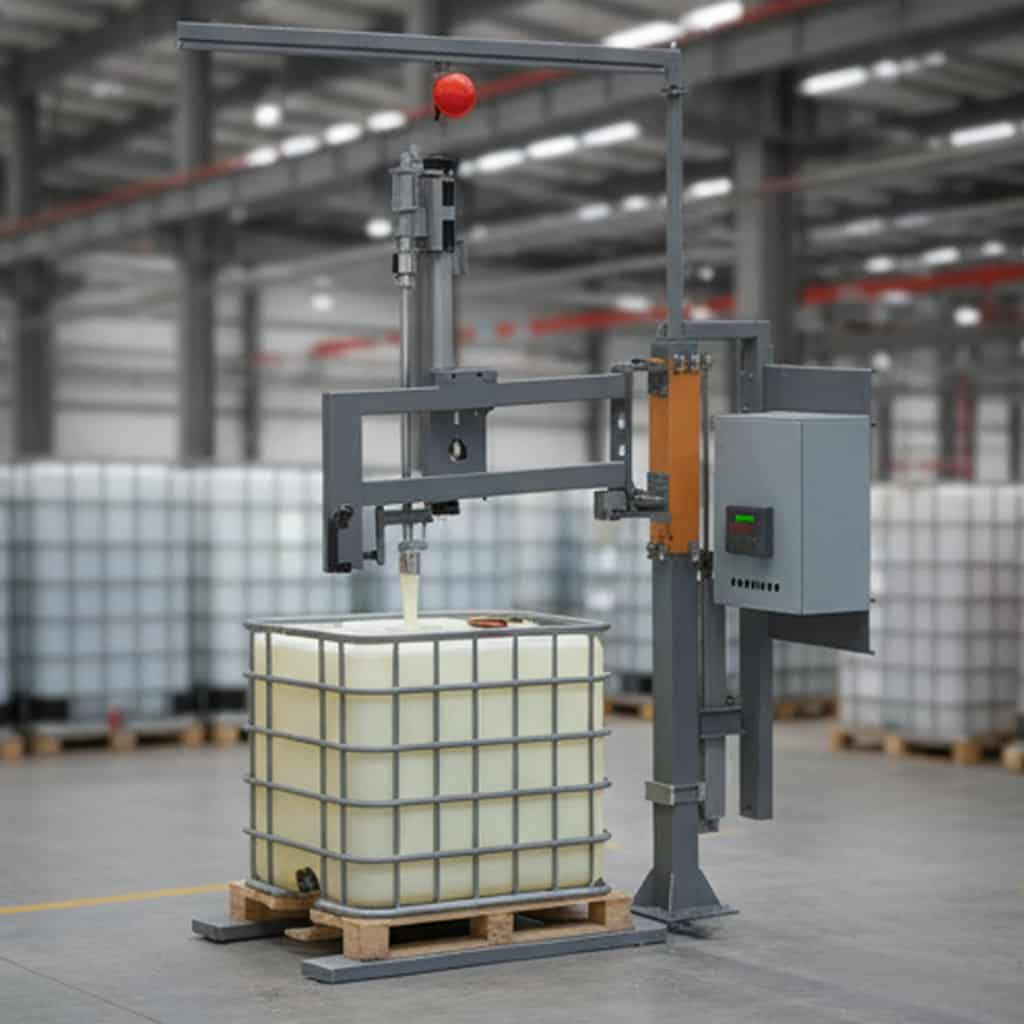
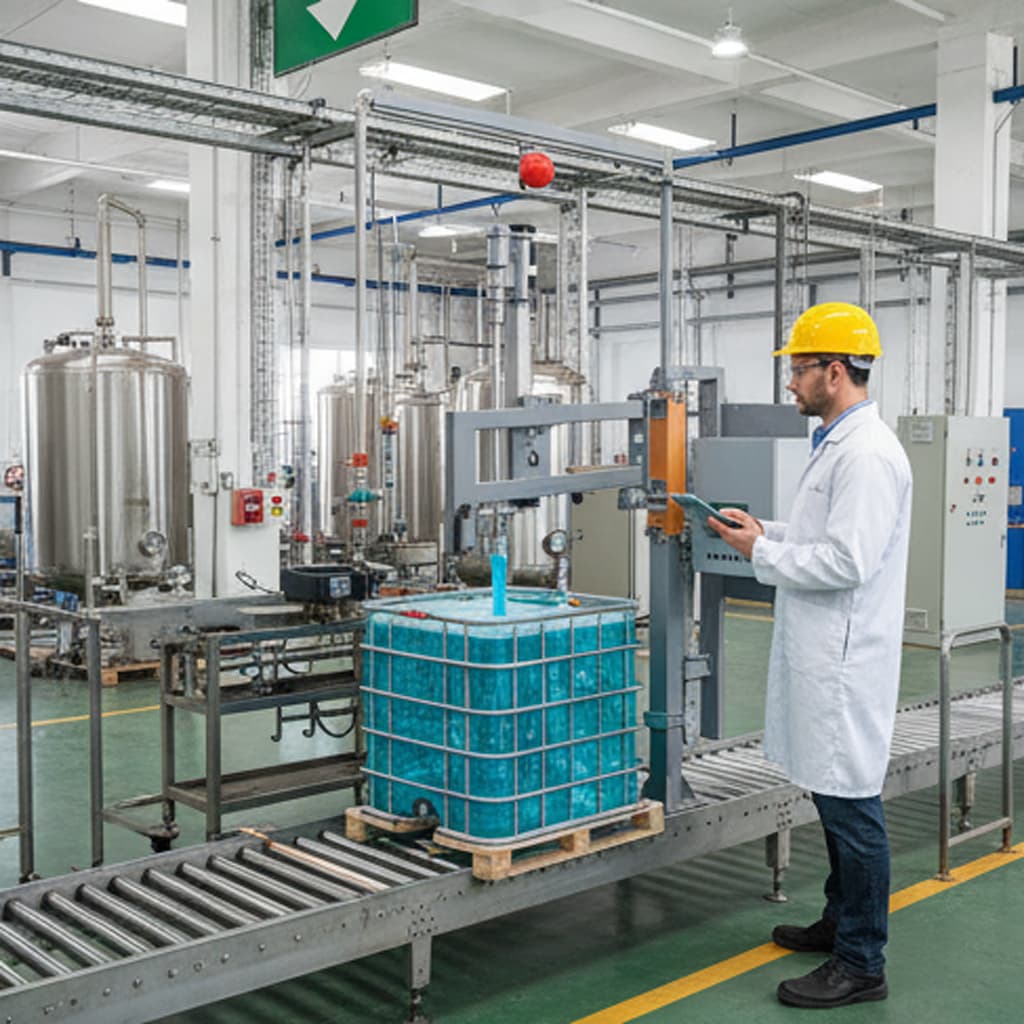
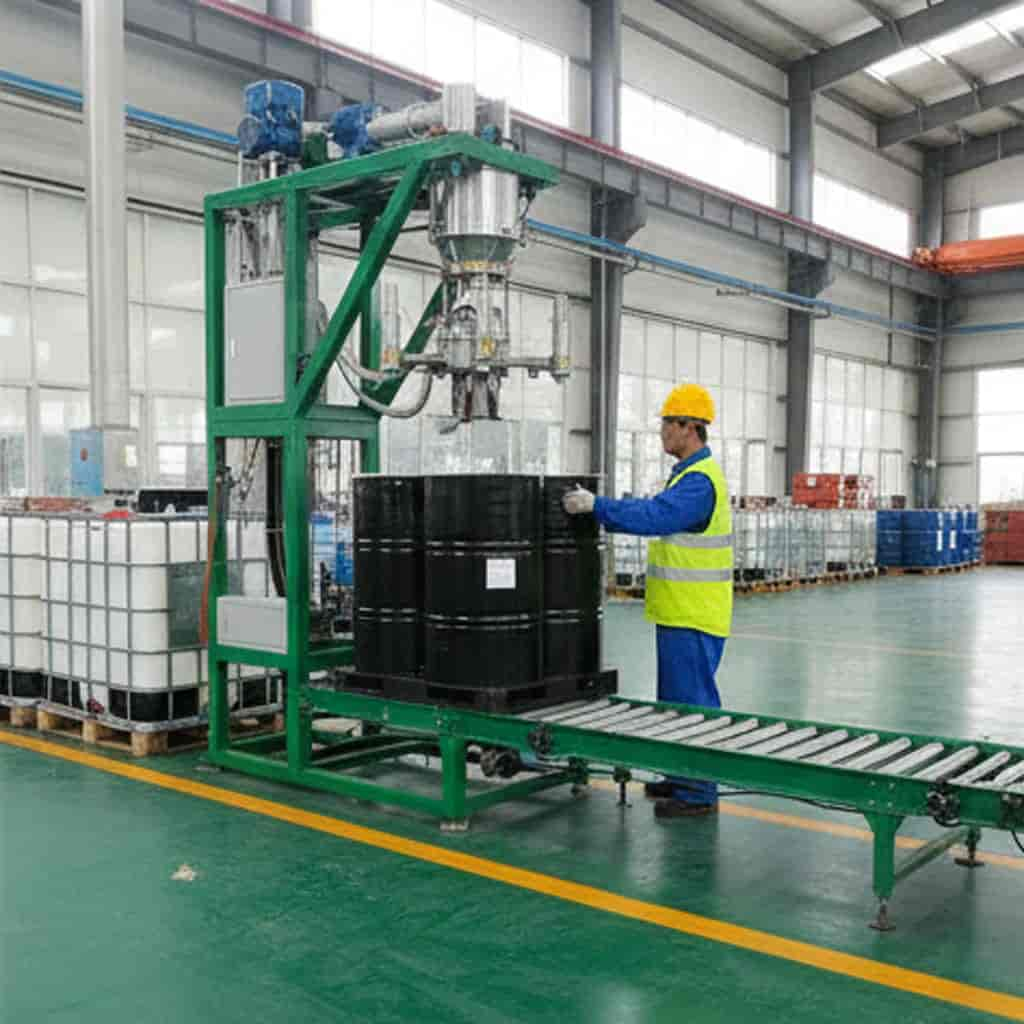
A semi-automatic IBC filling machine combines controlled liquid dispensing with operator-assisted container handling. Select the station around your tote dimensions, product properties, target net weight and handling plan. The quotation should identify which tasks are controlled by the machine and which remain with the operator.
This page helps buyers compare semi-automatic configurations. For the full equipment range, see our IBC filling machine page. For operating tasks and changeovers, use the separate semi-automatic drum and IBC operation guide.
What Is Included in a Semi-Automatic IBC Filling Station?
A proposed station can include a weighing platform, filling lance or nozzle, valve, controller and container-support arrangement. Pump supply, hoses, conveyors, closure equipment and discharge handling may be separate quotation items. Confirm the included equipment instead of assuming every station has the same scope.
Where net-weight filling is proposed, confirm the tare method, target range and verification procedure. Identify how the actual tote reaches the filling position and how it leaves when full. These interfaces matter when comparing standalone stations and equipment integrated into an existing production area.
Compare the Main Configuration Options
| Configuration item | Buyer information needed | What to confirm |
|---|---|---|
| Tote support and weighing | Container dimensions, tare and target quantity | Platform suitability, access and proposed weighing range |
| Nozzle or lance | Opening position, diameter and product behavior | Filling reach, movement, withdrawal and drip control |
| Product supply | Feed arrangement, viscosity and filling temperature | Included pump or supply interface and compatible wetted parts |
| Container transfer | Forklift, pallet or conveyor handling plan | Operator tasks, transfer equipment and closure scope |
| Controls and records | Recipe, verification and reporting needs | Functions included in the selected controller and any optional recording equipment |
Match the Station to the Actual Tote and Liquid
Provide photographs or drawings showing the tote dimensions, inlet opening, cage and pallet arrangement. A nominal 1000L capacity alone is insufficient to confirm nozzle access and platform fit. If drums will share the station, specify them separately so the supplier can assess reach, support and changeover requirements.
For the liquid, supply its identity, density, viscosity, filling temperature and relevant safety information. Describe foaming, suspended solids and cleaning needs. Compatibility should cover the complete product-contact path, including seals and hoses, rather than only the nozzle material.
Semi-Automatic or Automatic IBC Filling?
Choose the automation level by comparing the complete handling cycle and the tasks available operators can perform. A semi-automatic station may leave positioning, nozzle placement, closure or transfer to an operator. State which tasks you need automated and ask the supplier to identify them in the proposal.
For conveyor-based handling and additional automated stages, compare the automatic IBC filling configuration. Keep the comparison tied to your actual production layout and output requirement rather than the automation label alone.
Define Accuracy and Complete-Cycle Output Before Ordering
Agree on the target net weight, permitted deviation, tare procedure and measurement method. Ask the supplier to explain the conditions behind any accuracy claim and demonstrate repeated fills with the intended product or an agreed representative liquid.
Measure output across tote positioning, filling, settling, nozzle withdrawal, closure and removal. Supply flow alone does not establish completed totes per hour. Confirm what operating records are included; batch logging, printing and export should be listed explicitly if required.
Compare Quotation Scope and Operator Responsibilities
Give each supplier the same application brief and mark which equipment already exists at your factory. Compare the station, product supply, weighing arrangement, transfer equipment, cleaning provisions and installation support line by line.
Request a clear division of responsibilities for container placement, filling initiation, nozzle handling, closure and discharge. Then agree on the acceptance test, operator training, documentation and support scope. This helps distinguish a complete proposal from a station price that excludes necessary interfaces.
Evaluate Product-Specific Requirements
Oils, lubricants, cleaning liquids and other industrial products can have different flow and cleaning requirements. Do not assume that a configuration selected for one material is suitable for another without review. For corrosive or potentially flammable liquids, supply product and site information so the proposed equipment and documentation can be assessed for that installation.
If the application has hygiene or food-contact requirements, state the applicable requirements and request supporting material and equipment documentation. Such requirements must be confirmed for the selected configuration; they are not established by the general IBC filling category.
Information Needed for a Semi-Automatic IBC Proposal
Send the product properties, tote drawings or photos, target net weight, required complete totes per hour and proposed transfer method. Include the product-supply arrangement, available utilities, floor-space constraints and any need to fill drums on the same station.
Also list the required operator tasks, cleaning approach, closure equipment, recording functions and acceptance criteria. Request a configuration drawing and an itemized quotation before comparing suppliers. Use the operation guide after the proposed equipment and responsibilities have been defined.
Request a Semi-Automatic IBC Filling Configuration
Share your product, tote dimensions and required output to request a semi-automatic IBC filling proposal. Review the wider IBC filling machine range, or read the operator workflow guide for the separate operating overview.