Equipment Photo Gallery
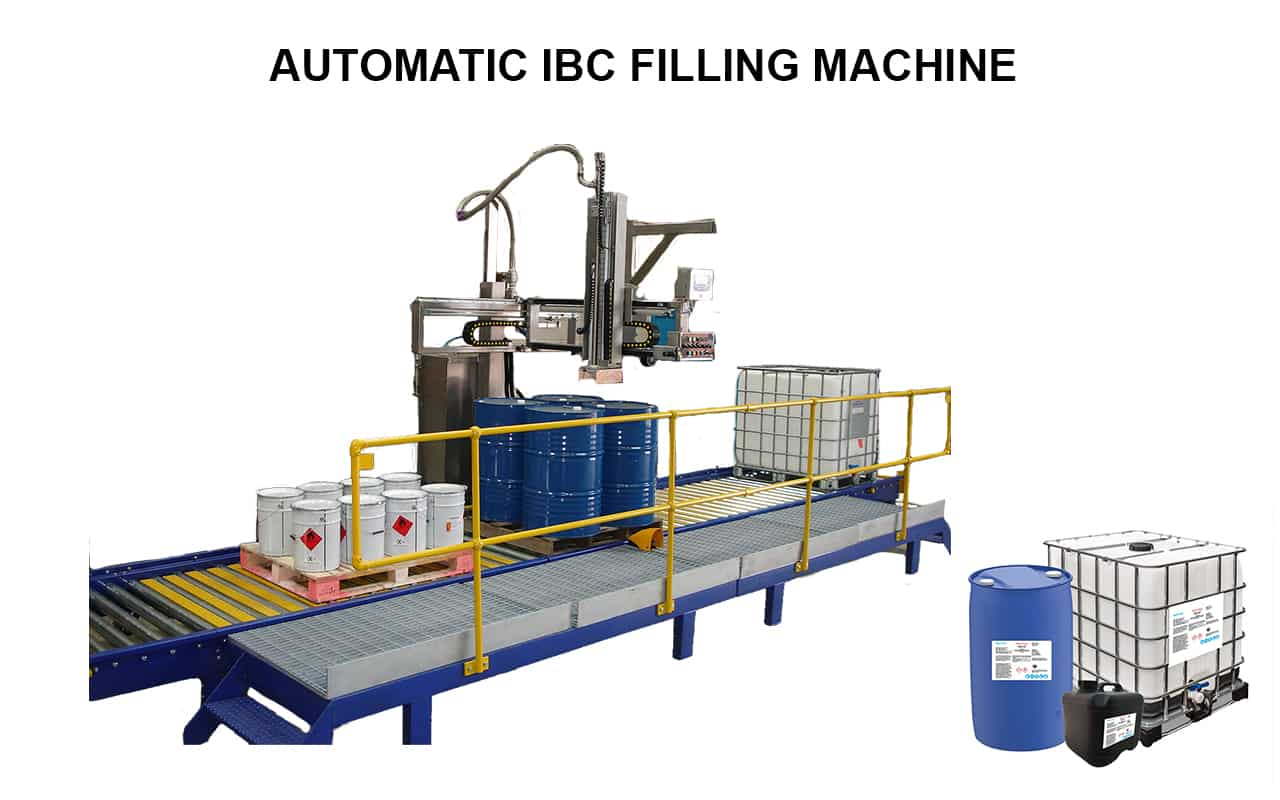

Drum and IBC Tote Filling: Compare the Handling Requirements
A combined drum and tote filling station can serve different container formats when its weighing range, nozzle travel and handling arrangement are specified for both. This guide compares those requirements. It does not assume that a machine configured for one format automatically accepts every drum or IBC.
For complete drum equipment options, see the drum filling machine range. For tote applications, review the IBC filling machine guide.
Compare the Containers
| Requirement | Drum | IBC tote |
|---|---|---|
| Dimensions and opening | Confirm diameter, height, opening location and closure. | Confirm tote height, footprint, inlet opening and cage clearance. |
| Weighing range | Allow for drum tare plus the target fill. | Allow for tote tare plus the target fill; verify platform capacity. |
| Nozzle movement | Match travel and access to the drum opening. | Check reach and withdrawal clearance above the tote inlet. |
| Handling | Define individual-drum or pallet handling. | Define forklift, pallet or conveyor access for the tote. |
Provide actual container drawings or measured dimensions. Nominal descriptions such as 200L drum or 1000L IBC help identify the format, but they do not replace a layout check.
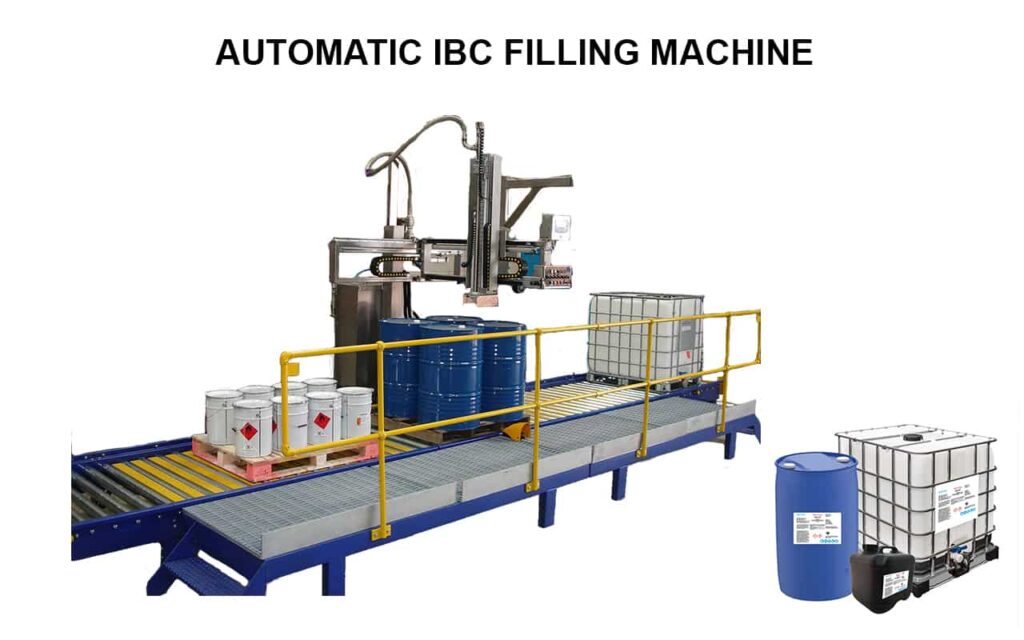
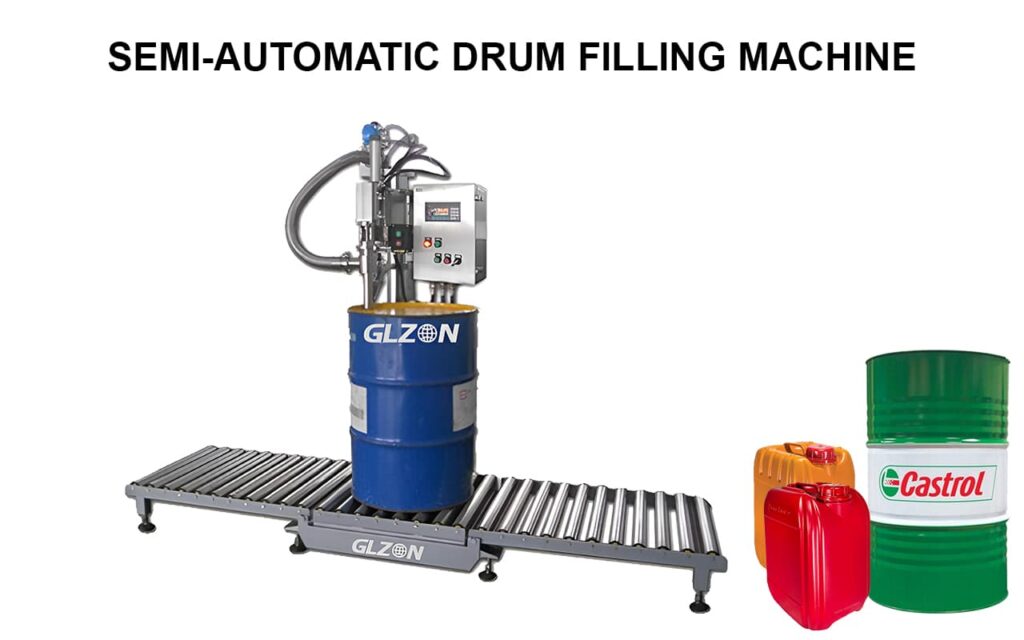
Plan Changeover Between Drums and Totes
- Agree which mechanical adjustments are needed for nozzle height, platform stops and guides.
- Confirm separate target-weight recipes and tare handling for each container.
- Check whether the same product-feed arrangement suits the required fill quantities and cycle times.
- Define operator access during adjustments, container positioning and inspection.
- Test both formats with the intended liquid before accepting the shared-station arrangement.
If drums arrive as a pallet group, clarify whether they stay on the pallet or are separated for filling. This changes weighing, nozzle reach and container transfer. For totes, confirm the method of bringing the container into position and moving it after filling.
Measure Output Separately for Each Format
A drum cycle and an IBC cycle have different fill quantities and handling tasks. Request separate complete-cycle results for each format. Include container loading, recipe selection, tare confirmation, filling, nozzle withdrawal and discharge.
Also record product temperature, viscosity and feed pressure. Comparing the same test conditions makes quotations easier to assess. A quoted drum output should not be converted into IBC output without testing the proposed arrangement.
Choose Shared or Separate Stations
A shared station may suit alternating batches and limited floor space. Separate stations may be appropriate when drum and tote production run at the same time or need different handling layouts. Compare changeover time, operator availability, required output and product-cleaning needs before selecting the arrangement.
For operator-assisted work, read the semi-automatic drum and IBC operation guide. Send container drawings, liquid details and required output for each format when you request a configuration quotation.