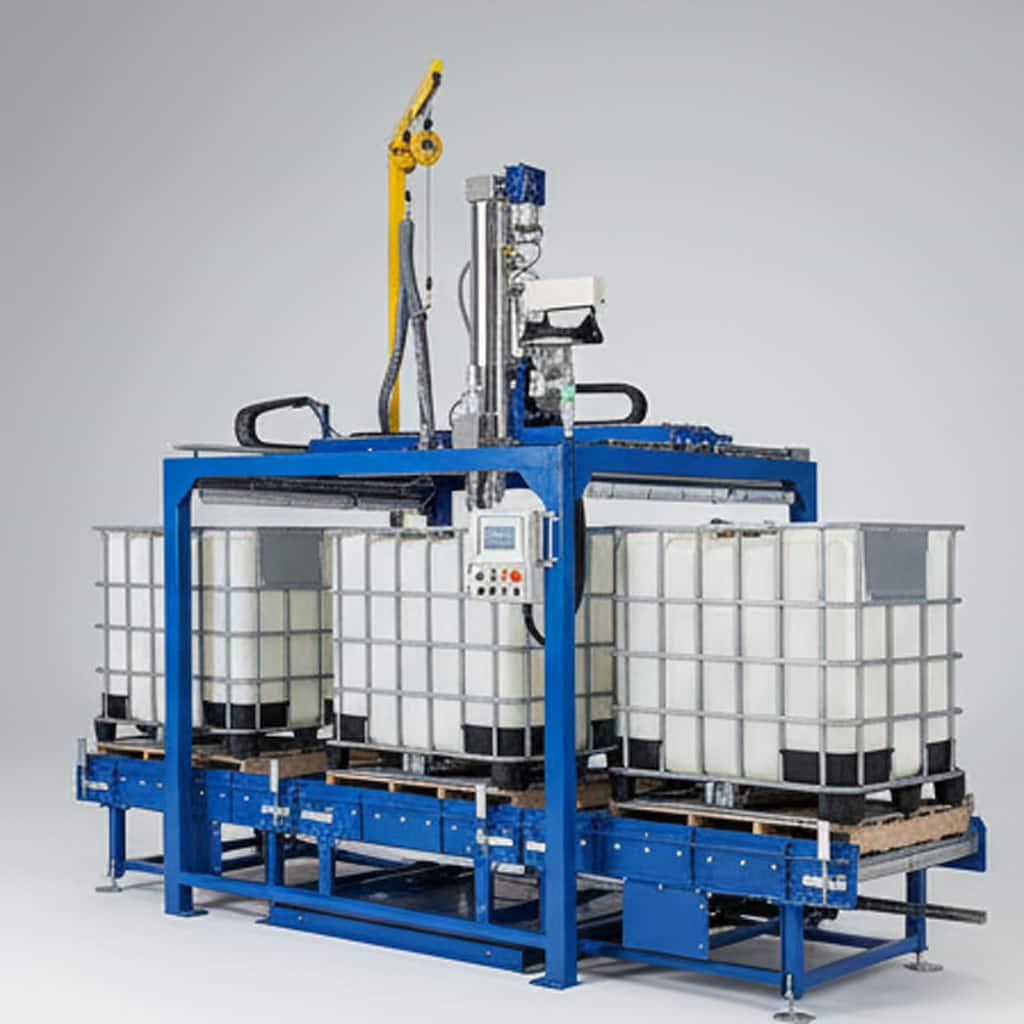
A resin filling machine is specialized industrial equipment that accurately dispenses viscous liquid resins—including epoxy, polyester, polyurethane, and phenolic resins—into containers ranging from 1 liter to 30 liters. When integrated with automatic capping systems, these machines create complete packaging lines that fill and seal jerry cans, F-style cans, tin containers, and drums in a single automated workflow .
What is a Resin Filling Machine?
A resin filling machine (also called an epoxy filling machine or chemical filling machine) is designed to handle materials with viscosities from water-thin solvents to thick pastes exceeding 50,000 centipoise. These systems use precision pumps, flow meters, or weight-based sensors to deliver exact fill volumes while minimizing waste and ensuring operator safety .
Primary Applications:
- Epoxy resins: Two-component systems requiring precise mixing ratios (1:1 to 10:1)
- Solvents and thinners: Low-viscosity, often flammable chemicals requiring ATEX compliance
- Polyurethane resins: Moisture-sensitive materials needing sealed transfer systems
- Phenolic resins: High-temperature curing compounds for industrial applications
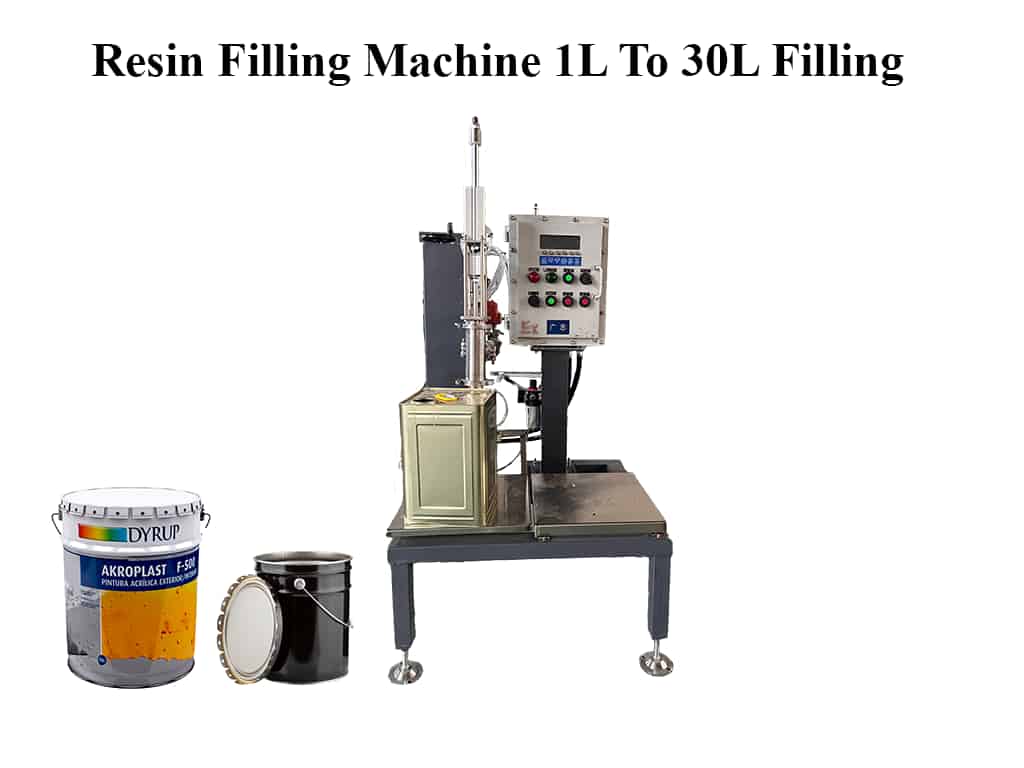
Types of Resin Filling Machines
Volumetric Filling Machines
Volumetric systems use piston pumps, gear pumps, or peristaltic pumps to dispense fixed volumes of resin. These filling machines offer:
- Accuracy: ±0.5% to ±1% of target volume
- Speed: 20–120 containers per minute depending on viscosity
- Cost-effectiveness: Lower initial investment for standard applications
Net Weight Filling Machines
Net weight systems use precision load cells to measure actual dispensed weight, making them ideal for:
- High-value resins where overfill costs are significant
- Temperature-sensitive materials where volume fluctuates
- Legal-for-trade applications requiring certified accuracy (±0.1%)
Gravity and Overflow Fillers
Best for low-viscosity solvents and thinners, these systems use simple gravity feed or overflow mechanisms for foamy or volatile liquids.
Long-tail Keywords: automatic resin filling machine, semi-automatic resin filler, high-viscosity filling equipment, chemical liquid filling machine
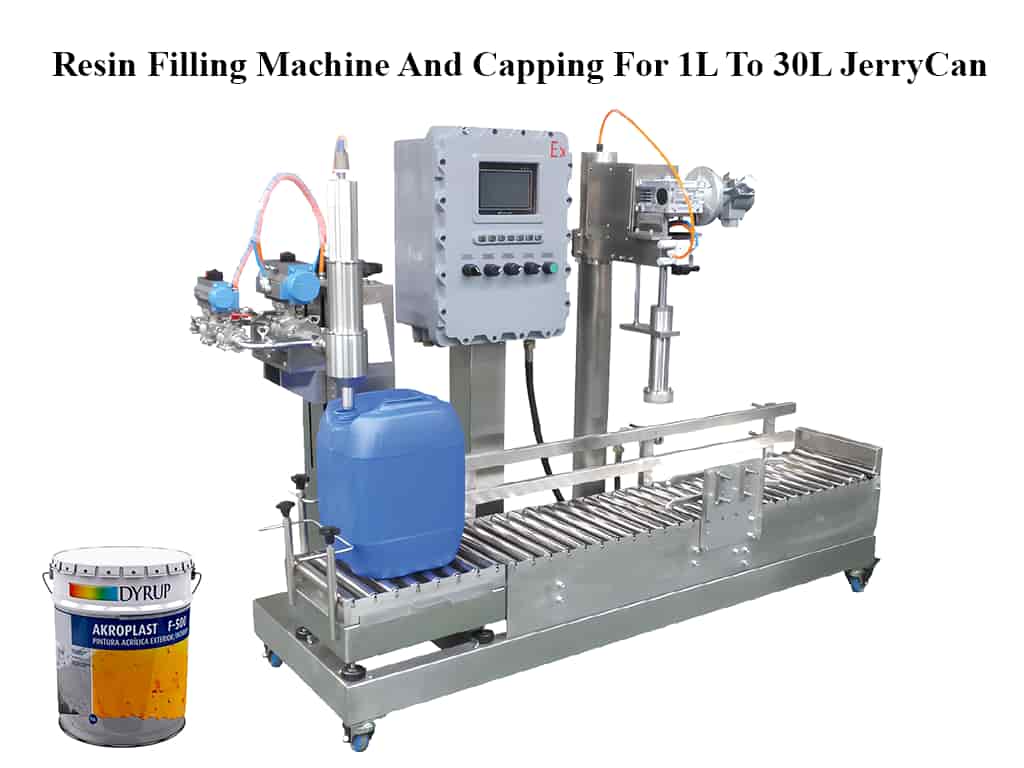
Integrated Capping Systems: The Critical Second Step
Modern resin filling lines incorporate automatic capping machines immediately after the filling station to ensure immediate container sealing. This integration prevents:
- Contamination from airborne particles or moisture
- Evaporation of volatile solvents
- Spillage during transport to secondary capping stations
Types of Capping Machines for Resin Containers
| Capping Technology | Best For | Torque Accuracy | Speed |
|---|---|---|---|
| Servo-driven screw capping | Jerry cans, F-style cans with screw caps | ±1% | 30–60 caps/min |
| Press-on capping | Snap-fit lids on pails and drums | ±2% | 40–80 caps/min |
| Crimp capping | Metal tins and aerosol-style containers | N/A | 20–40 caps/min |
| Trigger sprayer capping | 1L–5L containers with dispensing triggers | ±1.5% | 25–50 caps/min |
Container Handling: 1L to 30L Solutions
Jerry Can Filling and Capping (5L–30L)
Jerry cans are the most common container for industrial resins and chemicals. Automated jerry can filling lines handle:
- Plastic HDPE jerry cans: DIN 51 or DIN 63 neck finishes
- Metal jerry cans: Steel containers for solvent-based products
- Stackable designs: Rectangular profiles for efficient storage
Features:
- Automatic cap feeding via vibratory bowls or elevators
- Torque control to prevent distortion of plastic threads
- Leak testing stations for quality assurance
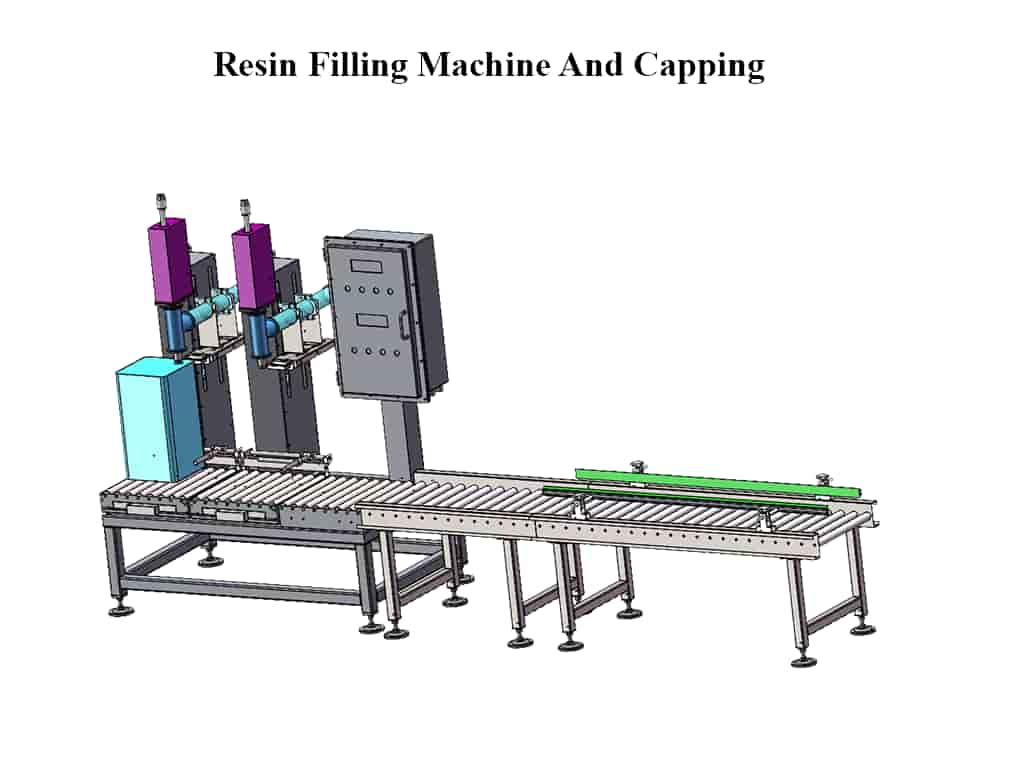
F-Style Can Filling (1L–5L)
F-style cans (rectangular containers with integrated handles) require specialized handling due to their non-cylindrical shape. F-style can filling machines feature:
- Orienting mechanisms to align handles consistently
- Offset filling nozzles for narrow openings
- Compact capping heads for tight clearances
Tin Container and Pail Filling (10L–30L)
Tin containers and steel pails are common for solvent-based resins and paints. Pail filling systems include:
- Lid denesting and placement systems
- Roller lid presses for secure sealing
- Gasket verification to ensure leak-proof closures
Complete Filling-to-Capping Workflow
Step 1: Container Depalletizing and Feeding
- Automatic unscramblers orient containers upright
- Conveyor systems transport containers to filling station
- Vision sensors detect container presence and reject damaged units
Step 2: Precision Resin Filling
- Net-weight filling: Load cells measure dispensed material
- Anti-drip nozzles with vacuum suck-back prevent spills
- Foam suppression for solvent-based products
- Vapor recovery systems for VOC containment
Step 3: Cap Placement and Feeding
- Cap elevators or centrifugal sorters orient closures
- Pick-and-place systems position caps on container threads
- Missing-cap detectors ensure 100% capping coverage
Step 4: Torque Application and Verification
- Servo capping heads apply precise torque (0.5–10 Nm adjustable)
- Real-time torque monitoring with data logging for traceability
- Automatic reject of under-torqued or cross-threaded caps
Step 5: Quality Control and Downstream
- Vision inspection verifies cap presence and alignment
- Leak detection stations (optional) for critical applications
- Labeling, case packing, and palletizing integration
Safety and Compliance Features
ATEX Explosion-Proof Systems
For solvent filling machines and thinner filling equipment handling flammable materials:
- Zone 1/Zone 2 certification for hazardous areas
- Intrinsically safe sensors and 24V DC controls
- Grounded conveyor systems prevent static discharge
- Explosion-proof motors with ATEX II 2G rating
Chemical Compatibility
- 316L stainless steel wetted parts for corrosive resins
- PTFE (Teflon) seals and gaskets resist chemical attack
- Halar coatings for extreme chemical environments
Compliance Keywords: ATEX filling machine, explosion-proof capping equipment, chemical-safe packaging line, hazardous area filling system
Industry Applications and Use Cases
Paints and Coatings Manufacturing
Paint filling machines handle solvent-based and water-based coatings in 1L–25L containers. Integrated capping systems apply tamper-evident closures for retail distribution.
Adhesives and Sealants
Epoxy filling machines for two-component adhesives require precision ratio control and static mixing before filling. Cartridge filling and capping for 300ml–600ml tubes.
Chemical Processing
Solvent filling lines for industrial thinners, degreasers, and cleaning chemicals feature ATEX compliance and vapor recovery systems.
Automotive and Aerospace
High-precision filling of structural adhesives, potting compounds, and composite resins with batch traceability and automated documentation.
Application Keywords: paint filling machine, adhesive filling equipment, chemical packaging machine, automotive resin filling
How to Choose the Right Resin Filling and Capping System
Selection Checklist
| Requirement | Question to Ask | Specification |
|---|---|---|
| Viscosity Range | What is the viscosity of your resin at filling temperature? | <500 cps (gravity) to >50,000 cps (positive displacement) |
| Container Range | What sizes and types will you run? | 1L–30L jerry cans, F-style, drums, pails |
| Production Speed | How many containers per hour? | 500–10,000+ units/hour determines automation level |
| Hazard Classification | Is the product flammable or corrosive? | ATEX, corrosion-resistant construction |
| Changeover Frequency | How often do you switch SKUs? | Tool-less changeover vs. fixed format |
| Integration Needs | Do you need labeling, palletizing? | Turnkey line vs. standalone filler |
Buying Guide Keywords: how to choose resin filling machine, filling machine selection guide, chemical packaging equipment buying guide, resin filler purchase criteria
Maintenance Best Practices for Filling-Capping Lines
Daily Maintenance (15 minutes)
- Clean filling nozzles and capping chucks to prevent resin buildup
- Inspect conveyor belts for chemical degradation or misalignment
- Check cap magazine levels and feeding mechanism
- Verify safety guards and emergency stops function
Weekly Maintenance (1 hour)
- Lubricate capping spindle bearings with food-grade grease
- Clean cap vibratory bowls or elevator tracks
- Inspect O-rings and pneumatic seals for swelling or cracks
- Test torque calibration with sample containers
Monthly Maintenance (4 hours)
- Calibrate load cells and torque sensors
- Check alignment between filling and capping stations
- Inspect ATEX electrical connections in hazardous zones
- Review production data for fill weight or torque deviations
Annual Overhaul
- Replace high-wear components: pump seals, capping chucks, gripper pads
- Verify ATEX certification integrity and documentation
- Update control system software and security patches
- Conduct comprehensive safety audit
Market Trends and Future Innovations
The liquid filling machine market is evolving with:
- Industry 4.0 integration: IoT sensors for predictive maintenance and remote monitoring
- Collaborative robotics: Cobots for cap feeding and container handling reduce labor by 26%
- Sustainability focus: Reduced product waste through precision filling (<0.5% overfill)
- Modular designs: Scalable systems allowing filling and capping stations to be added as production grows
Frequently Asked Questions (FAQ Schema Markup)
Q1: What is the difference between a resin filling machine and a standard liquid filler? A: Resin filling machines are built to handle high-viscosity, often abrasive or chemically aggressive materials. They feature heated tanks, positive displacement pumps, and corrosion-resistant construction that standard liquid filling machines lack.
Q2: Can one machine fill both 1L and 30L containers? A: Yes, modern filling and capping machines offer quick-change tooling and adjustable conveyor heights to accommodate 1L to 30L containers (jerry cans, F-style cans, drums) with minimal changeover time.
Q3: What safety features are required for solvent filling lines? A: Solvent filling machines require ATEX explosion-proof electrical components, grounded conveyors, vapor recovery systems, and intrinsically safe controls to prevent ignition in hazardous environments.
Q4: How fast can an automatic resin filling line operate? A: Speed depends on viscosity and container size. Automatic filling lines typically run 20–120 containers/minute for small volumes (1L–5L) and 10–30 containers/minute for large drums (20L–30L).
Q5: What is the typical ROI on an automated filling-capping system? A: Most manufacturers see ROI within 12–24 months through labor reduction (40–90%), decreased product waste (<0.5% overfill), and increased throughput
Conclusion: Investing in the Right Resin Filling and Capping Solution
Choosing the optimal resin filling machine with integrated automatic capping requires careful analysis of your resin properties, container specifications, production targets, and safety requirements. Whether you need an epoxy filling machine for two-component adhesives, a solvent filling line for flammable thinners, or a jerry can filling system for 20L chemical containers, modern automation delivers precision, compliance, and efficiency.